


Tori Jenae is a transformational life strategist in Los Angeles with three degrees in psychology and roughly twenty years of study in Eastern practice running alongside the Western training. One thing she said in a recent conversation on my podcast has stayed with me since. She reached the age of thirty having built an entire life that was not aligned with what she actually wanted. It was what she thought she was supposed to do, assembled out of what happiness appeared to look like on television and in films and on a screen held six inches from her face.
What makes that worth sitting with is that nothing went wrong along the way. There was no single decision anyone would call a mistake.
Consider how it actually happens. A field of study chosen at nineteen because it was the answer that produced approving nods at a family dinner. A first job taken for reasons that made sense at the time, which becomes the experience listed on a resume, which qualifies a person for the next job in the same direction. A house in a particular neighborhood because that is what arriving was supposed to feel like. Each of those decisions is defensible standing alone. Fifteen years of them, stacked, produce a life with a shape nobody consciously chose.
There is a second version that hides better, and it fools more people. A childhood home that was rigid and controlled can produce an adult who is deliberately unstructured, suspicious of plans, quietly proud of being a free spirit. That adult has traveled a long way from the house they grew up in. They have not traveled away from its authorship. The rigid parent is still holding the pen, just writing in the opposite direction. This is why so much of what gets called liberation turns out to be exhausting to maintain.
So here is the question that seems worth pressing on. If a life can be built to someone else’s specification without anyone noticing, how would a person ever find out?
That question deserves a moment before anything rushes in to answer it.
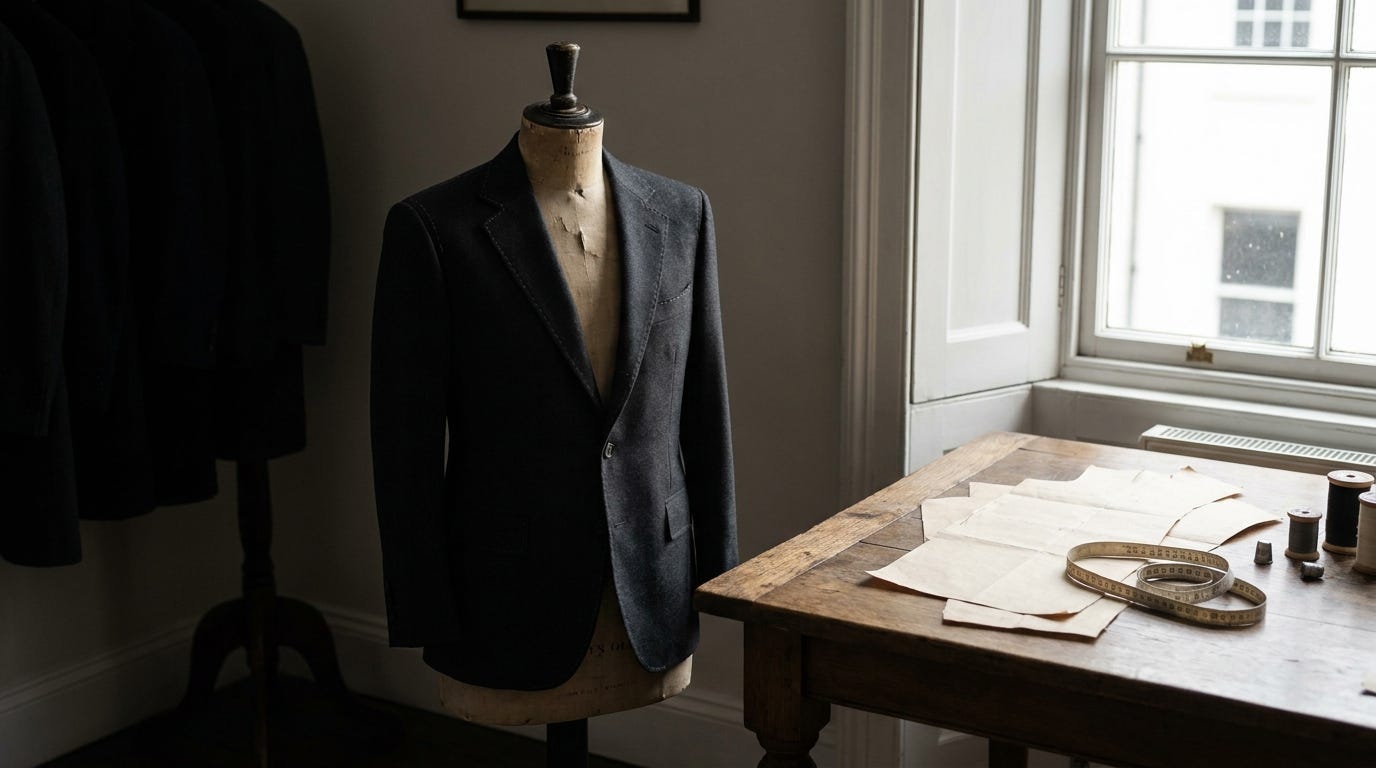
The difficulty is that a borrowed identity does not announce itself as borrowed. It feels like preference. It feels like personality. It arrives with a full set of reasons attached, and the reasons are usually good ones, because a person of reasonable intelligence has been quietly generating justifications for it since they were twenty two.
Direct introspection is not much help here, which is why the useful evidence tends to be indirect. It shows up in the gap between different versions of the same person.
This is the part of the 4D Personal Portrait that people tend to sit with longest. Before it examines anything else, it looks at three selves rather than one. There is the self a person presents to the world, the version that shows up in a meeting or at a dinner party with its posture already arranged. There is the innate self, the natural wiring underneath, the way a person operates when nothing is being adjusted for anyone. That one shows up in solitude, in the company of people who require no performance, in the kind of rest that actually restores rather than merely stops the day, and most visibly under real pressure, when there is no time to select a response and the natural design simply takes over. And there is the self a person believes themselves to be, the internal picture they carry around and consult when someone asks who they are.
Most people assume those three are roughly the same person. They are frequently not.
The distance between them is the information. A wide gap between the public version and the innate one usually means a great deal of energy is going into maintenance, and energy spent on maintenance is not available for anything else. That is often the first honest explanation a person encounters for why they are so tired at the end of a day that contained nothing particularly difficult.
The other pattern is quieter and easier to miss. Sometimes the public self and the innate self agree with each other, and it is the internal picture that stands apart. A man still describes himself as the quiet one who hates being the center of attention, while everyone who has ever worked with him watches him take charge of a room within about four minutes of entering it. That description was true of him in high school. It is also the one he consults when something comes up that would put him in front of people, and he says no to those without much deliberation, using a version of himself that expired thirty years ago.
The Portrait moves inward from there, through four layers. Natural Rhythm, which is the way a person is actually wired to operate. Natural Fit, the conditions and environments where they give their best rather than their most. Inner Compass, the values that hold steady when circumstances do not. And at the center, Inner Spark, the motivations that generate real energy, the kind that arrives on its own rather than the kind produced by discipline and obligation.
The assessments underneath it were built for business, used by companies deciding who to hire. Reworking that model to focus on the person rather than the role took some time. What it produces is a map of a self that most people have not looked at closely in years.
None of this is a verdict. A person can look at all of it and reasonably conclude that the life they built is genuinely theirs, that the shape came from the inside, that the exhaustion has an ordinary cause. That happens, and it is a good outcome. The point is to have actually looked, rather than assuming.
The entry point is smaller than most people expect. It is not a program. It is closer to a single question, asked several times across an ordinary week, about whether the thing being defended right now is genuinely yours or something you were handed. Most adults cannot reliably tell whether they are hungry or tired, which makes the larger questions somewhat ambitious. Start with the small ones and the larger ones become answerable.
I would invite you to notice, sometime this week, one preference you have never once examined. Not to change it. Just to ask where it came from, and whether the person who chose it is still the person living here.
To listen to the full podcast with Tori click here.
Concepts drawn from the 4D Personal Portrait.
© Dr. Doug Gulbrandsen