

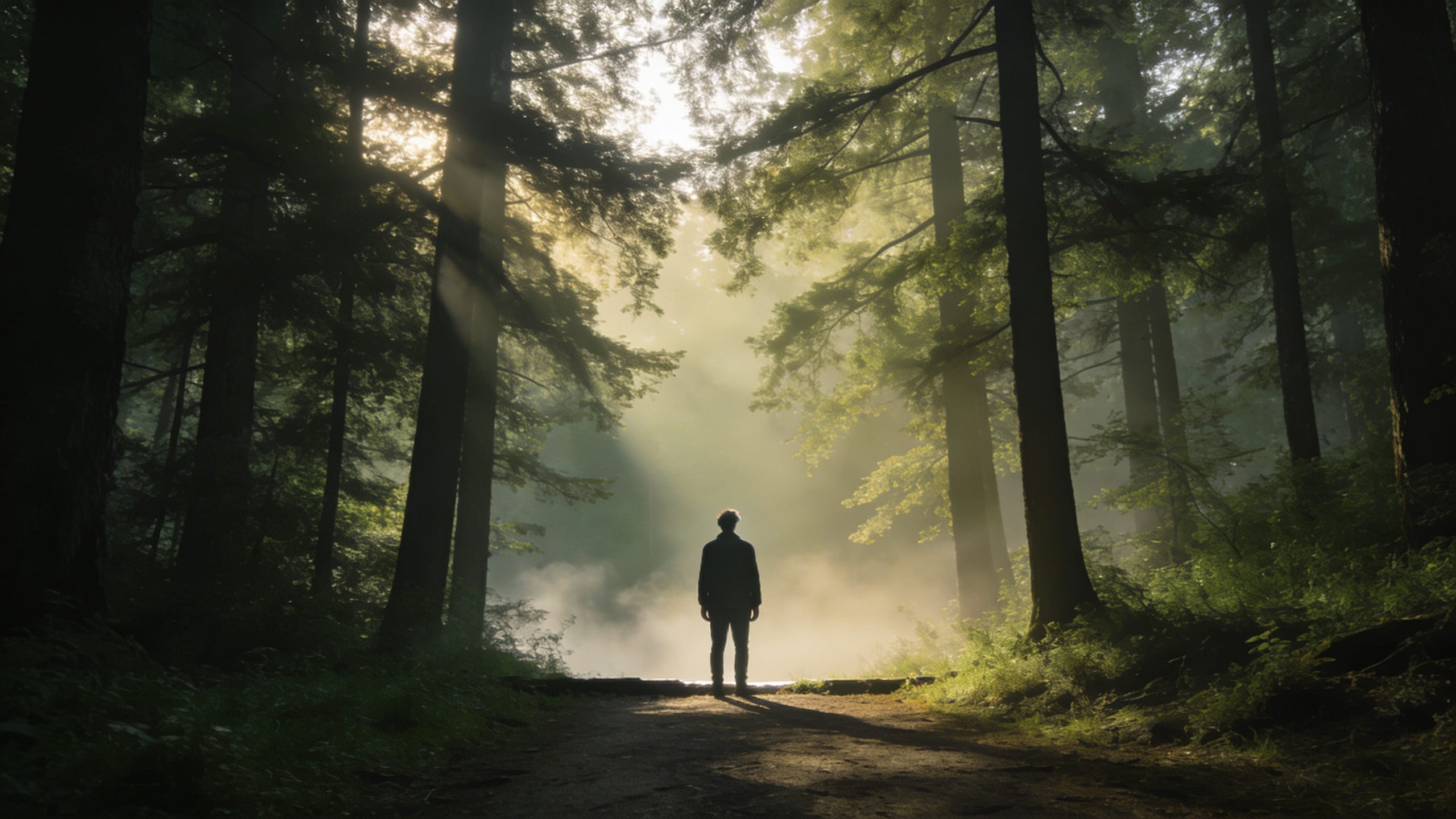
I used to think I was bad at being still. I would try to stop, close my eyes, and within about forty seconds I was composing emails, relitigating a conversation from 2009, and mentally reorganizing my garage. The stillness wasn’t peaceful. It was loud in a way that regular life wasn’t.
What I eventually understood is that this is not a personal failing. It is almost universal among people who have spent years running. And many of the people I have encountered who describe themselves as restless or tired are not tired of doing. They are tired of the voice that starts talking the moment the doing stops.
Some people call these scripts. I think that is a useful word. They are the internal narrations we inherited, from parents, from religious formation, from early experiences of being evaluated and found wanting, and they have been running so long that most of us have simply accepted them as the truth about who we are. Silence is threatening because silence is when the scripts get loud.
So the question I kept returning to was not “how do I find peace?” It was more specific than that: what would it actually take to stand in a moment of peace and quiet without immediately looking for a way out?
What I found is that stillness is not a state you achieve. It is more like a space you build. And like any space, it has an architecture.
The first element is threshold. In my experience, the body needs a signal that something different is beginning. Not a ritual for its own sake. I am suspicious of rituals that become performance. But a genuine marker.
For me, it is movement first. I walk. Not to arrive somewhere, but to let the body begin to settle. Then I stop. Usually somewhere with trees, or open sky, or water nearby. I close my eyes and breathe. The walking is the transition. The stopping is the beginning.
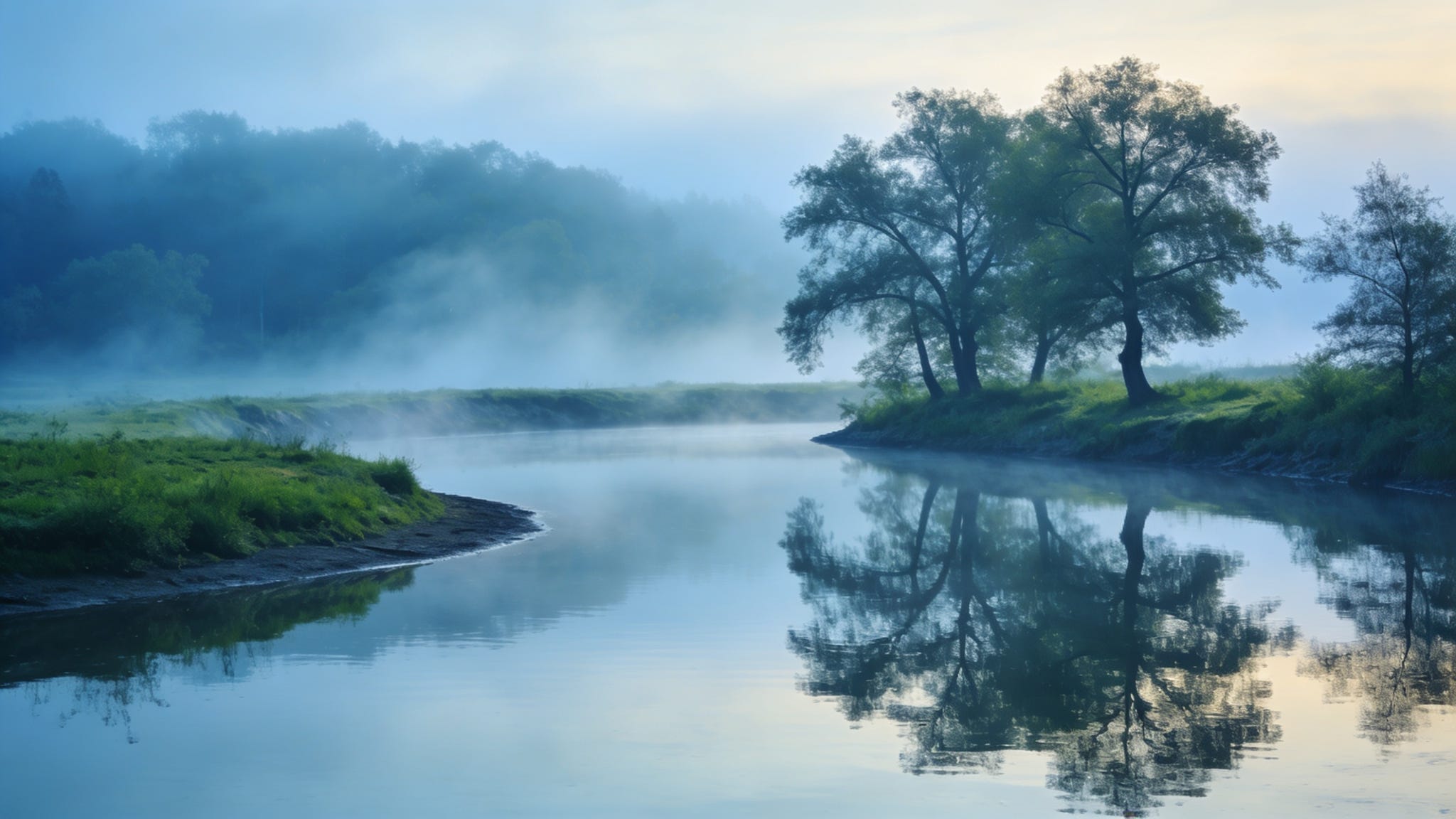
I mention this because most people carry an image of stillness that involves sitting motionless in a quiet room. That is one version. It is not the only one, and for many people it is the hardest place to start. Walking then stopping works. Standing in an open space works. Gentle yoga works, because the slow movement of the body through deliberate postures can settle the nervous system in the same way that standing in a field can. Tai chi works for the same reason. What these practices share is not stillness of the body. It is stillness of agenda. You are no longer moving toward anything. That is the actual threshold.
There is research behind this. Rachel and Stephen Kaplan at the University of Michigan developed what they called Attention Restoration Theory, which found that natural environments restore the kind of directed attention that daily life depletes. Nature holds us with what they called soft fascination. It asks nothing effortful from us. Separately, Japanese researchers studying shinrin-yoku, or forest bathing, have measured real physiological changes from time in natural settings. Reduced cortisol. Lower blood pressure. Less activity in the areas of the brain associated with rumination. A 2019 paper in Frontiers in Psychology found that twenty minutes in a natural setting produced measurable cortisol reduction. Twenty minutes is not a long time.
For people living in cities, I want to be honest rather than reassuring. A park works. A tree-lined street works. Water is particularly strong in the research. Urban rivers, a fountain, open sky near water. The same mechanism applies, at somewhat reduced intensity. What does not work as well is pretending a windowless office with a plant on the desk is the same thing as standing in a field. If your access to nature is genuinely limited, a park bench with trees early in the morning is a real option. It is not equivalent to open land, but it is not nothing either.
The second element is what I would call an object of return. This is something simple that you come back to when the scripts start. And they will start. That is not failure. That is simply what the mind does. The practice is not the absence of thought. It is the return.
For many people, myself included, sound is what makes this possible. Not background noise. Something intentional. Singing bowls, binaural beats, solfeggio frequencies. What these do, at a practical level, is give the mind something to rest on rather than fight. The restlessness does not disappear, but it has somewhere to go. The sound becomes the object of return. In Buddhist meditation traditions, this returning is considered the actual work. The wandering is not the problem. The wandering is the occasion.
Here is something I keep contemplating: most of us were taught, somewhere, that rest had to be earned. That stopping without producing anything was a form of laziness or avoidance. That thought is itself a script, and it is one of the more persistent ones. It shows up, reliably, about three minutes into any genuine attempt at quiet. I am speaking from my own experience and from what I have observed in others, but I have yet to meet a person who did not recognize that particular voice.
The third element is time. An hour sounds long. For most people beginning this, it is. That is not where you start. Five minutes of genuine stillness, with the discomfort and the restlessness and the inventory of everything you should be doing, is worth more than an hour of performing calm. Do five minutes for a week. The capacity builds slowly, but it builds. The longer stretches become possible after the underlying tolerance is there. Not before.
What changes over time is not that the scripts go away. It is that you begin to notice them as scripts. There is a small but significant gap that opens between the voice and the belief that the voice is true. That gap is where something else can live.
I knelt before a statue of Buddha once, in a temple in Vietnam, and felt something I did not have language for at the time. It was not insight. It was not emotional. It was closer to what I would now describe as the body recognizing the absence of pressure. The whole architecture of that space had been built to create that experience. I did not know that was what I was walking into.
Most of us are not walking into temples. We are walking into apartments and houses and offices and the noise of ordinary life. Which is why the architecture matters. The space will not create itself.
I find it worth asking: what are you actually afraid will happen if you stop? Not the practical answer. The real answer. In my experience, what most people fear is not the silence. It is what the silence might confirm. That the life they are living is not quite the one they wanted. That they have been running, for years, from a thought they never stopped to finish.
That is not a comfortable thing to be with. But it is, I have found, the beginning of something.
A quiet practice is not a performance of peace. It is not a technique for productivity. It is simply a space where, if you stay long enough, you begin to remember that the voice narrating your life is not the same thing as your life.
I invite you to consider what one honest session might look like. Not an ideal one. Not a spiritual one. A real one, in your actual life, with the actual noise that shows up when you stop moving.
That is where it starts.
©Doug GulbrandsenI