

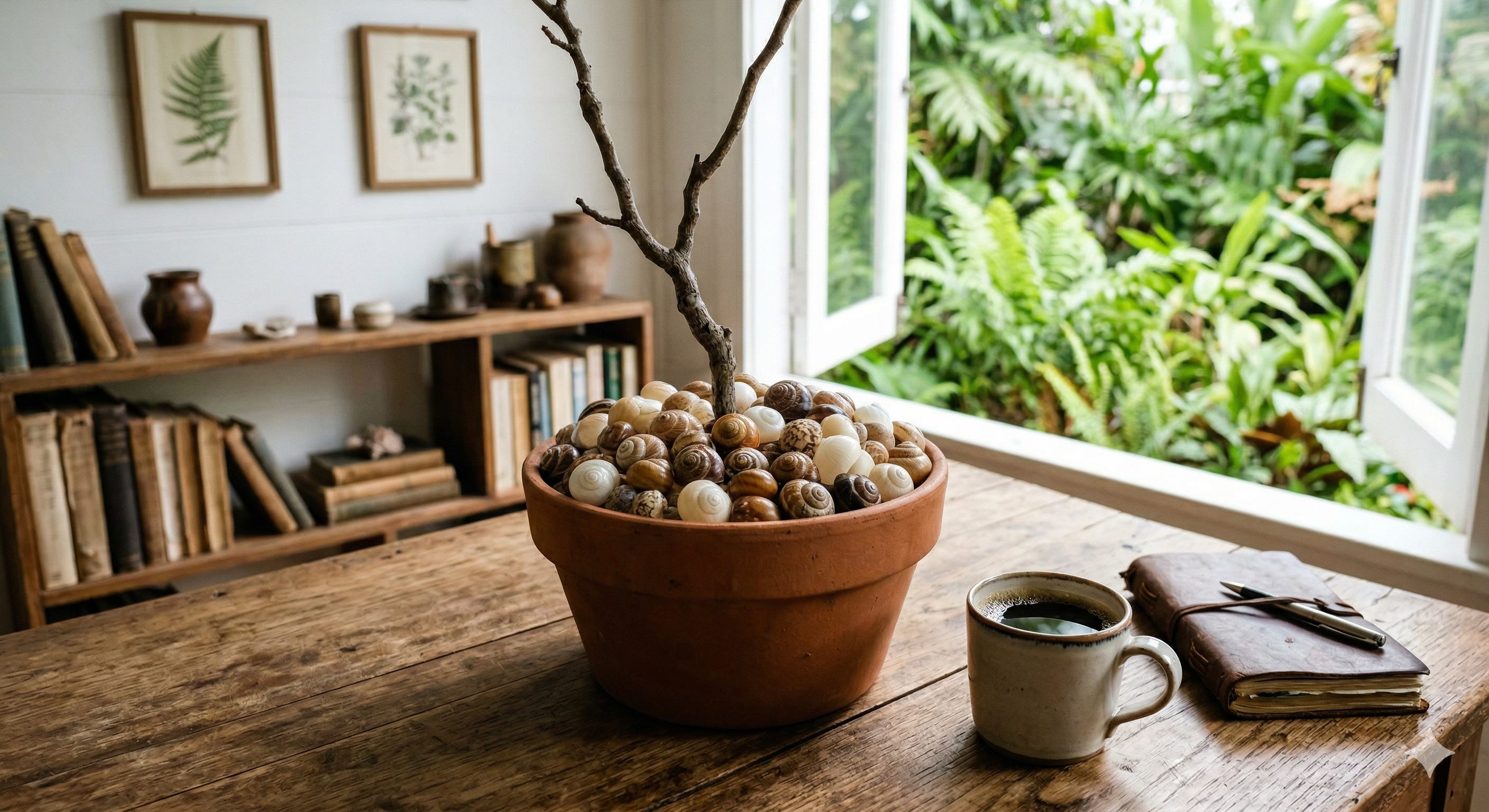
There is a simple clay pot on my desk in Thailand, and inside it I keep a small collection of snail shells. I started finding them on my morning walks — through the fields and along the edges of the small lakes near the house. I would pick one up, turn it over, notice the colors. Earthy browns, golden ambers, a few that are nearly white, and every shade between. Each one slightly different from the last. After a while I started bringing them home, and somewhere along the way they became a collection without my quite deciding to make one.
That detail about the spiral is what I keep returning to.
Living here in Thailand, I have learned that the snail shell carries particular meaning in the culture. The spiral is understood to have two directions at once: one that moves outward, and one that moves inward. The outward movement represents the life we build in the world — relationships, work, the ways we show up and engage and contribute. The inward movement is something quieter. It represents the return. The turning back toward stillness, toward whatever lies at the center of a person when the noise settles.
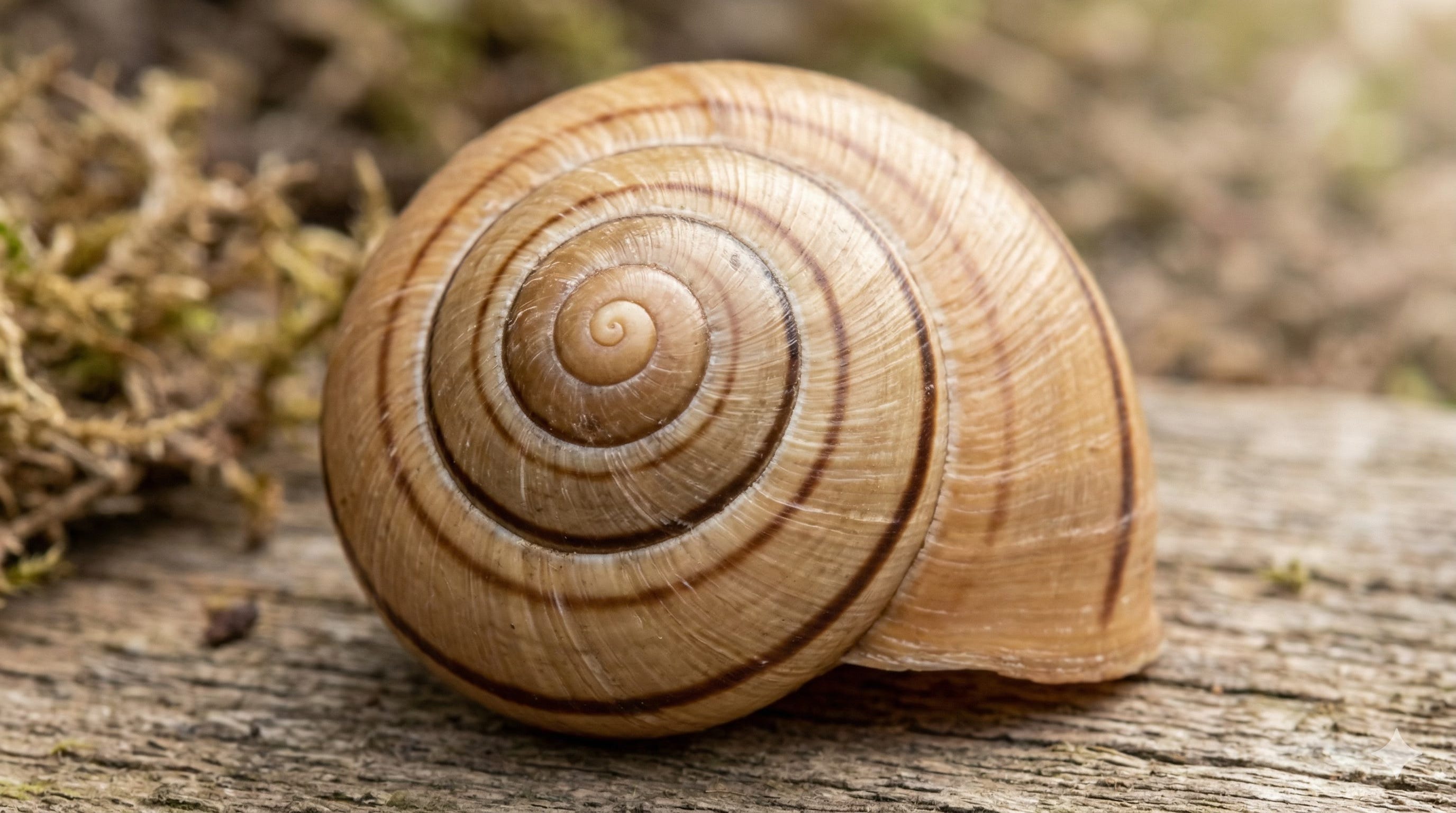
What I find interesting is that the shell does not favor one direction over the other. The spiral requires both. You cannot have the outward without the inward, and you cannot sustain the inward without eventually moving outward again. The shell holds them together in one continuous form. I find that worth sitting with for a moment.
What the shells have made me notice is how varied people are on the surface — different backgrounds, different histories, different ways of moving through the world — and yet something underneath seems to remain consistent. I am not sure exactly what to call it. A shared capacity for feeling lost, maybe. A shared longing for something quieter than what the world tends to offer. What I have come to believe, as best I can see it, is that each person carries a spark of divinity somewhere underneath all of it. Not a theological claim, exactly. More of an observation. The people I have known who seem most genuinely at peace tend to carry themselves as though they have found that spark and stopped trying to argue themselves out of it.
The shells remind me of that. On the outside, no two are the same. Pick up any handful and you will not find an identical pair. And yet the spiral inside each one follows the same quiet logic.
I think about the outward and inward directions a great deal in the context of this work. Most of us were trained almost entirely in the outward direction. Produce, perform, engage, respond, build. The inward direction was rarely presented as equally important, let alone necessary. And yet here are these shells, sitting in a clay pot on my desk, suggesting that the whole structure depends on both.
What I have come to think is that the inward direction is simply what makes the outward one possible over time. Most of us run on the outward movement for years without questioning it, and it works until it doesn’t. Then something gives. The energy isn’t there, or the meaning isn’t there, or both. What I have found is that the people who seem to sustain a full life over the long run are usually the ones who learned, somewhere along the way, to take the inward direction just as seriously. Not as a correction, but as a natural part of the same movement the shell has always been making.
That, to me, is what a quiet return looks like. Not a dramatic change of direction. Just the spiral doing what it was always designed to do — moving outward into the world, and then finding its way back to the center. Again and again. Without force. Without urgency.
What might it mean to honor that inward direction with the same seriousness you give the outward one? I don’t have a clean answer to that question. But I find it worth asking.