

Life imprints can only affect us if we allow it.
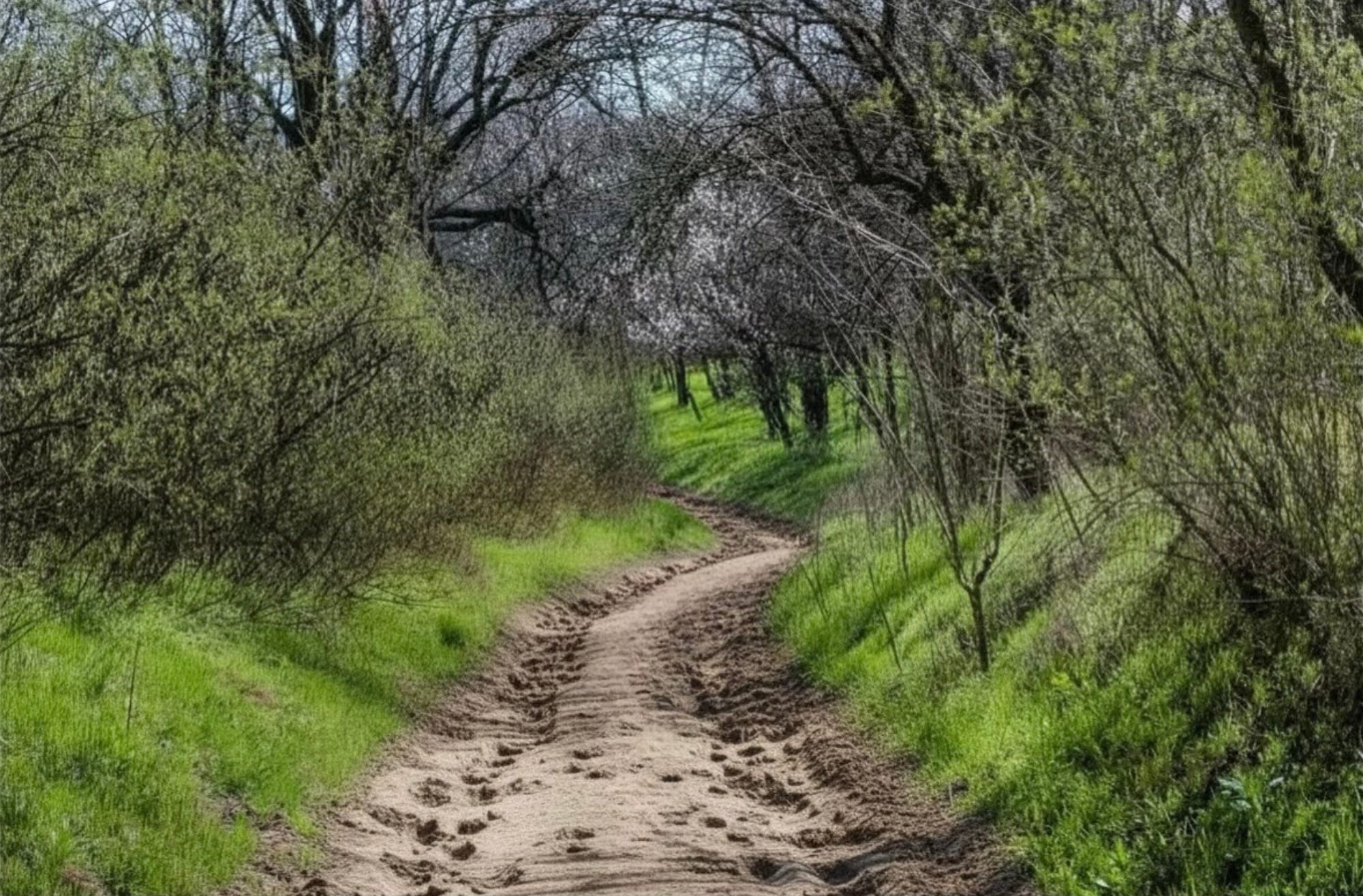
The Imprints Beneath the Path
Dr. Doug Reflects • A Quiet Return
Most mornings I take a walk through the fields near my home in Surin, Thailand. There’s not much to it—just open ground and a worn path that’s mostly level and clear.
But not entirely.
The grooves are hard to miss—deep ruts pressed into the earth by cars, motorcycles, wandering cows. Some of them are a 6 inches deep. But even though they’re obvious, if you’re not paying attention, they’ll catch your foot and send you stumbling.
The thing is, because I can see them, I can step around them. I can adjust. The walk stays smooth—not because the path is perfect, but because I’m aware of where the uneven ground is.
What we can see, we can navigate.
And that’s a picture I keep coming back to.
The Imprints We Cannot See
We all carry imprints. Not the kind made by tires or hooves—but the kind pressed into us over years by voices, experiences, and assumptions that shaped how we see ourselves and the world.
A parent’s offhand remark about what we’d never be good at. A teacher’s impatience that taught us our questions weren’t welcome. A religious framework that left us believing we were fundamentally broken. A friend’s betrayal that quietly taught us not to trust. Years of social media telling us who we should be by now.
These imprints settle into the subconscious mind. They don’t announce themselves. They don’t ask permission. They simply begin to shape how we respond to life—our emotions, our reactions, our beliefs about what we deserve, what’s possible, and who we really are.
And unlike the grooves on a dirt path, we often don’t even know they’re there.
That’s the difference.
On my morning walk, I can see the imprints before I reach them. I adjust. In life, most of us stumble first—a reaction that feels too big for the moment, a belief that quietly limits us, a pattern we can’t seem to break—and only then, if we’re willing to pause, do we begin to wonder: Where did that come from?
Have you ever had that experience? A moment where your reaction surprised even you—and you thought, that wasn’t really about what just happened, was it?
The Energy They Carry
One of the things I’ve noticed is that these imprints don’t just sit there quietly. They carry real energy.
They shape our emotions on a daily basis. They influence what we believe is true about ourselves, about others, about what life is allowed to offer us. They quietly steer us away from happiness, from peace, from the very things we say we want most. They determine our life experiences.
And they do all of this beneath our awareness.
So when life feels heavier than it should—when joy feels distant, when peace feels like something other people experience, when we keep arriving at the same frustration or the same emptiness despite our best efforts—it may not be that something is wrong with us.
It may be that we’re walking a path full of grooves we haven’t yet learned to see.
What if much of what we’ve been trying to fix about ourselves isn’t really broken at all—just buried under imprints we never chose?
The Quiet Shift
Here is what I’ve come to believe: we can change this. Not through force. Not through performance or self-improvement programs. But through something much simpler.
Clarity.
When we begin to notice an imprint—when we catch ourselves reacting in a way we wish we didn’t—something begins to shift. We don’t have to fight the imprint. We don’t have to dig it out of the earth. We simply see it. We acknowledge it. And then, gently, we step around it.
In my experience, that’s where real change starts. Not with doing more, but with seeing more clearly.
This isn’t about pretending the grooves aren’t there. It’s about no longer letting them decide where we place our feet.
A Quieter Way to Walk
Every morning, those fields in Surin remind me that the path doesn’t have to be smooth for the walk to be worth taking. It just asks that I stay aware of where I’m stepping.
I think the same is true for the life we’re living.
The imprints left by parents, by religion, by culture, by loss—they’re real. They’re deep. And they’ve had their say for a long time. But as best I can see it, they are not the final word.
The quiet return isn’t about fixing ourselves or forcing something new into place. It’s about learning to see what’s already there beneath the surface—and choosing, one step at a time, to walk a little differently.
I invite you to ponder this: What imprints might be shaping the path you’re walking today—and what would it feel like to simply notice them, without judgment, and gently step around?
Dr. Doug
A Quiet Return