

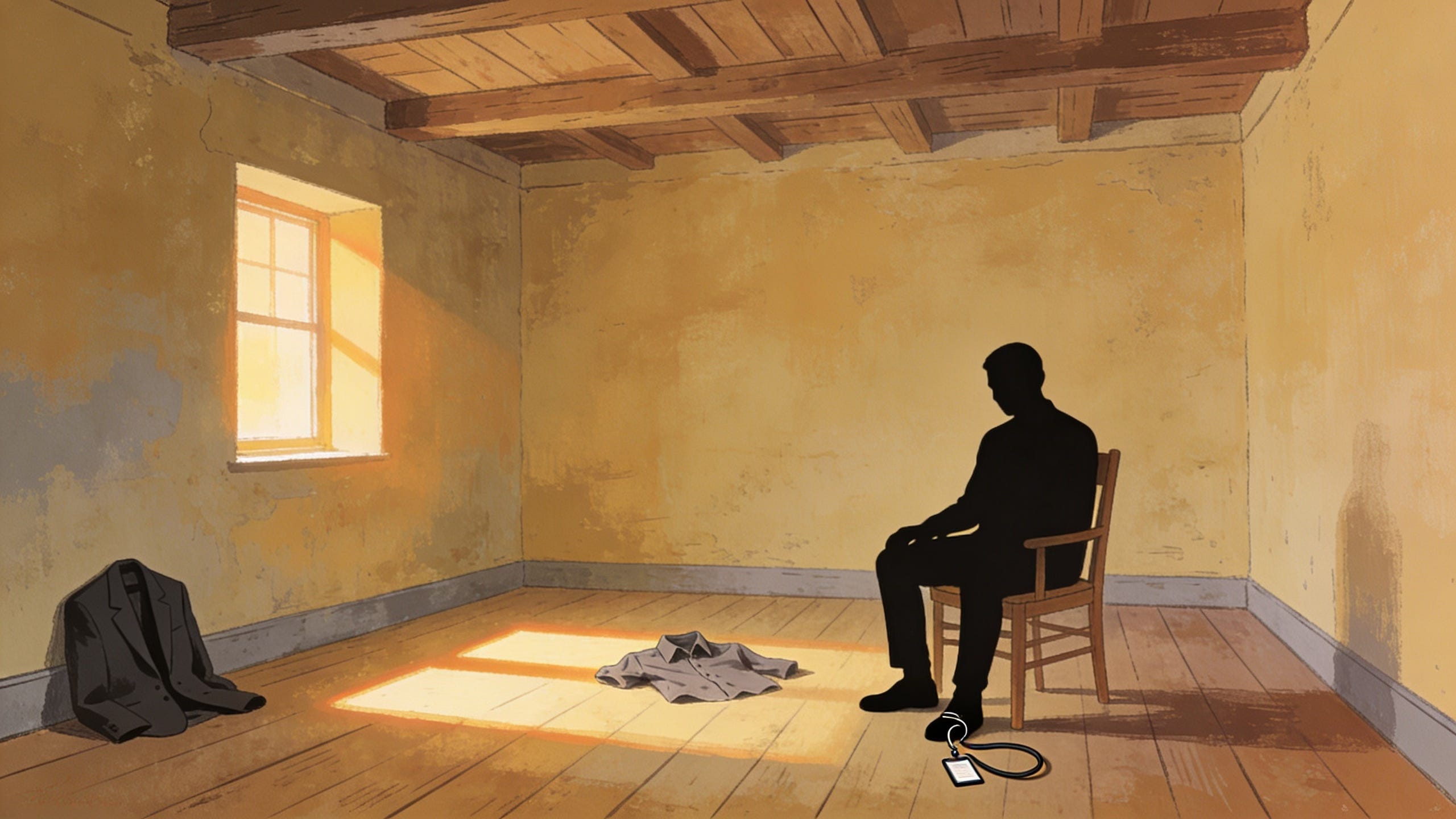
Most of us have been shaped, quietly and over a long period of time, into a version of ourselves that is designed to be acceptable. To fit. To meet what the environment — the workplace, the family, the social circle — seems to require. We do this without deciding to. It happens gradually, through years of feedback about what is welcomed and what is not, what earns approval and what costs it.
The result is a public self. Behavioral researchers sometimes call it the mask, or the adapted profile. It is the personality we have assembled in response to the world’s expectations — and most of us carry it so long and so consistently that we stop noticing it is there. We begin to experience it simply as who we are.
Here is what I find worth considering. It may not be.
The same researchers who map the public self also identify a second profile, one they call the private or core self. This one is older. Less constructed. It is who you are when the performance drops — not only under genuine pressure, but also in the quiet moments when you are finally at ease. When no one is watching. When you are not trying to be anything in particular. Both conditions reveal the same thing: the self that was there before the adaptation began.
What is striking is how different these two profiles often are. A person who presents as steady, agreeable, and accommodating in public may, in private, turn out to be quietly precise, independent, and far less interested in consensus than their public behavior suggests. The gap is not deception. It is the accumulated weight of being told, in a hundred small ways, who you need to be in order to belong.
What does it mean to spend years — sometimes decades — performing a version of yourself that was built for someone else’s comfort?
That question is worth sitting with before moving past it.
There is a third profile as well, sometimes called the perceived or integrated self. It sits between the public and private — the day-to-day average that results from constantly balancing who you actually are against who you believe you need to be. This is the self most people would describe if asked. Neither the full mask nor the full truth. A kind of moving settlement between the two.
Understanding all three matters, but the private profile is the one I keep returning to. Not because it is defined by difficulty — though it does emerge under pressure — but because it is equally the self that surfaces in genuine rest. In the conversation where you finally stopped performing. In the work that held you so completely you forgot to manage how you were coming across.
Here is where it becomes interesting to me. That relaxed private state is not simply the absence of performance. Something more specific is happening there. When the prefrontal cortex — the part of the brain responsible for considered judgment, patience, and deliberate choice — is fully online, the values and motivators a person carries most deeply begin to express themselves naturally. The things you actually believe about how life should be lived. The things that genuinely give you energy rather than drain it. In that state, behavior becomes less a response to the environment and more a reflection of who the person actually is at their core.
Those underlying values and motivators — what might be called the inner compass and the inner spark — are worth their own extended conversation, and I plan to explore them in the pieces that follow this one. For now, what matters is simply to name where they live. They live here. In the quiet. In the private. They are most visible when the performance stops and the person relaxes into themselves.
The pressure side of the private profile tells a different story, and it is worth being honest about the distinction. Under extreme stress, the brain shifts its resources. The amygdala, which governs survival response, takes priority. The careful, values-aligned version of a person does not disappear — but it gets bypassed. What surfaces instead is something older and more reactive. A person who values harmony may go cold and silent to protect themselves. A person wired for directness may become blunt in ways that surprise even themselves. Neither is acting on their values in those moments. They are acting on instinct. On whatever the nervous system has learned to do when genuine threat arrives.
This is important to understand because it means the private profile contains two distinct expressions. One emerges from safety and reflects who a person truly is at their best — values integrated, motivators engaged, behavior chosen rather than reactive. The other emerges from threat and reflects the oldest, most survival-oriented patterns a person carries. Both are real. Neither is the whole story.
What tends to happen when people encounter this framework for the first time is recognition. Not surprise, exactly. Something quieter. A sense of having been seen in a way they had not quite managed to see themselves. Because most of us know, somewhere underneath the adaptation, that the public version is not the whole story. We have felt the weight of it. We have had moments — usually alone, or with someone we trust entirely — when something relaxed in us that is almost always held taut.
The conditioning that built the public self was not malicious. Parents, teachers, institutions, workplaces — they were communicating what they understood about how the world works. What earns safety. What earns belonging. And those lessons were not all wrong. But they were not all right either, and most of us absorbed them without ever being invited to examine them.
The private self did not go away. It simply learned to wait.
The question worth sitting with is not how to eliminate the adapted self — context is real, and some adjustment to environment is simply honest engagement with the world. The more interesting question is whether you can begin to recognize the difference. The difference between thoughtfully adjusting how you show up and running a sustained performance of a personality that was never quite yours. And whether you can create enough genuine quiet in your life that the values-aligned, motivated, fully-yourself version of you gets regular time to simply exist.
That version tends to be more capable, more specific, and more interesting than the public one. It has fewer edges smoothed off. It carries more of what that particular person actually is.
The invitation is not a project of self-improvement. It is closer to a quiet return. Something already there, waiting to be recognized.
Concepts drawn from the 4D Personal Portrait.