

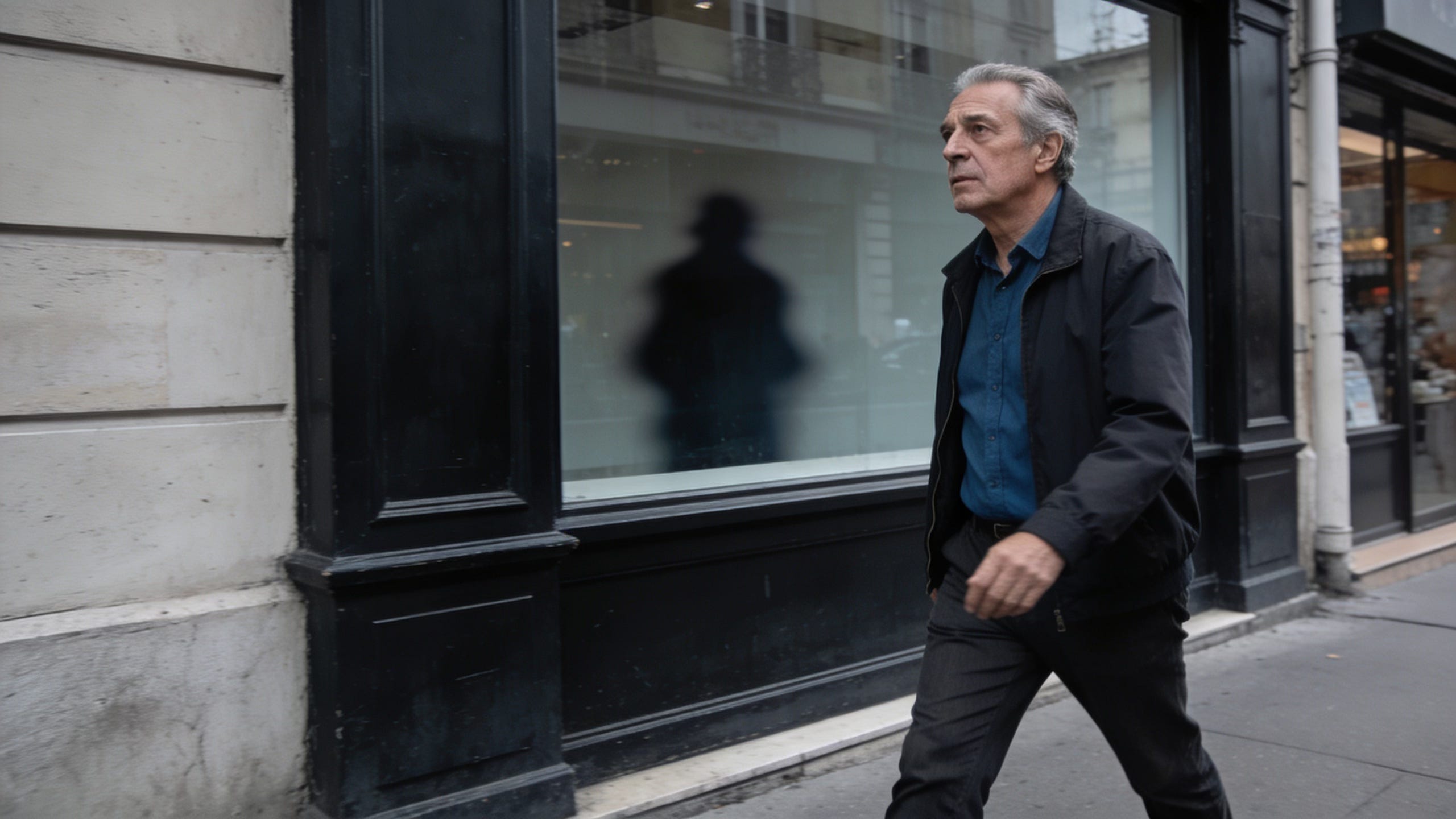
At some point in a life, usually without warning, the questions change.
The early questions are about building: career, family, financial stability, the structures that hold a life together. Most people are good at that phase. They know how to work toward something, how to make progress, how to show up. Nobody warns you about the next set of questions.
The building is largely done. What surfaces in its place is harder to answer. Who am I, actually. And is this the life that reflects that.
In my experience, this is the question that sits beneath most significant life transitions. People rarely name it that directly. They describe it as restlessness, or a sense that something is missing, or a feeling that the life they have built fits them less well than it once did. What I have found is that the restlessness is usually pointing at something real: a gap between the self that other people see and the self that has been operating quietly beneath the surface all along.

Most of us have spent considerable energy developing the outer layer of who we are, what I call the Surface: our communication style, our professional identity, the way we present ourselves in relationships and public situations. This layer is real, but it is the most visible one and the most shaped by external expectation. It is also, almost by definition, the layer that receives the most attention. Including from ourselves.
Beneath that is Natural Fit: the environments and types of engagement that sustain you rather than deplete you. This goes well beyond career. It describes the conditions under which you come alive, the kinds of relationships that feel genuinely nourishing, the way you prefer to spend time when nobody is telling you what to do. Many people reach the middle years having built a life shaped primarily by circumstance and opportunity, and discover that those conditions have delivered something solid, but not particularly alive.
Deeper still is the Inner Compass. The values you would name in a conversation are often aspirational. The Compass operates at a different level. It is the set of values that actually govern your choices when you are not paying close attention, the non-negotiables that have to be present for you to feel genuinely at home in your own experience. When life is aligned with these, there is a quality of settledness that is unmistakable when present and quietly corrosive when absent.
At the center is the Inner Spark: the core motivations and attitudes that generate genuine energy, the kind that arises when you are engaged with something that actually matters to you rather than the energy that comes from discipline or obligation alone. People who understand their Spark tend to ask different questions at transition points. They are less likely to simply replicate the past in a new setting, and more likely to ask whether the next chapter will engage what is deepest in them.
Here is what I keep coming back to. A podcast conversation about legacy landed differently than I expected. I had thought about the subject before, but hearing it discussed out loud, at this point in my life, reinforced something I had not quite found words for.
My father was a classical voice teacher at Northwestern University in Evanston, Illinois. He was genuinely excellent at it, and many of his students went on to remarkable careers in opera and concert performance. When he died, they came to his memorial service and described the training, the technique, the decades of dedicated teaching. They also kept returning to something simpler: he taught us to succeed, to win, to live, to love. That is ten words. It took sitting in that room to understand why those ten words carried more weight than everything else that was said.
Decades of quiet attention to the person in front of him gave his students something skill alone cannot provide: an orientation to life. That is what the inner layers are actually for.
The framework behind this Portrait originated with the PeopleKeys 4D Analysis, where it has long been used by companies to understand the people they hire. What I have found is that the same lens, turned away from the organizational question and toward the person themselves, reveals something those hiring processes were never designed to surface: the self that nobody sees, including the self you may not have examined in some time. At a transition point, that kind of clarity changes what questions you are able to ask.
What would it mean to understand that layer of yourself clearly enough to let it shape what comes next?
Concepts drawn from the 4D Personal Portrait.