

A friend said something to me a few days ago that I have not been able to put down. We were talking about the way people describe themselves, and he pointed out that almost every description begins the same way. Two words. I am.
He brought it up deliberately, because he felt it was a significant idea. He was right. I have been contemplating it for the last few days, and once I started hearing it, I heard it everywhere.
I am exhausted.
I am anxious.
I am broken.
I am depressed.
I am angry.
I am a failure.
The problem isn’t that these experiences aren’t real. They often are. The problem is that we have quietly turned passing emotions into permanent identities.
There is a small difference between saying “I am afraid” and saying “I feel afraid.” It is easy to miss in conversation, and large enough to change how long the fear stays.
Here in Thailand it rains most afternoons this time of year. Hard, and then it stops. I have never once heard anyone say, “I am rain.” They say it is raining. Everyone understands that the storm is passing overhead and will be gone before dinner.
Yet when sadness arrives, we say “I am sad,” as though sadness has become an identity rather than the day’s weather.
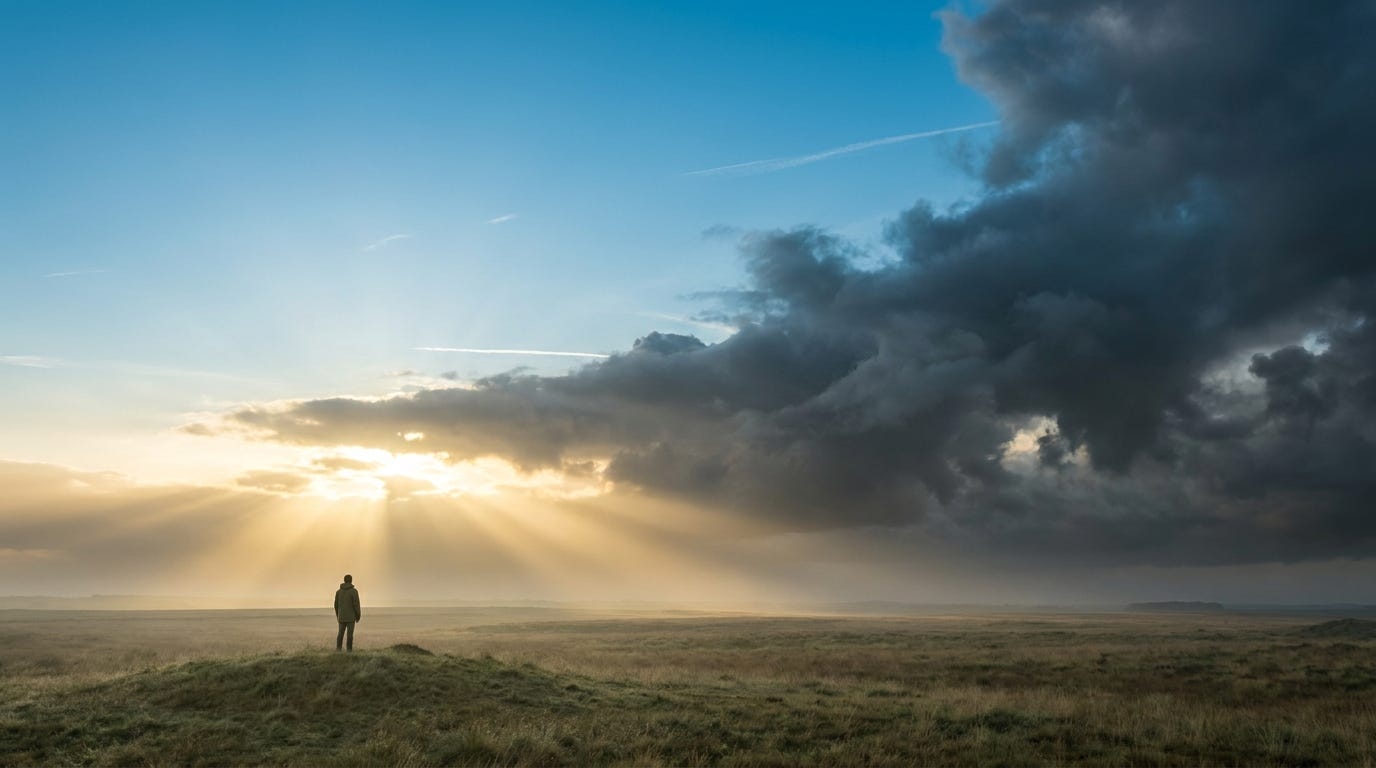
Our emotions move through us much the way clouds move through the sky. Sometimes they stay for minutes. Sometimes for months. They are still visitors. The sky holds the storm without becoming it.
Many of us learned early to attach ourselves to whatever emotion happened to be present. Feel shame long enough and you become the ashamed one. Feel anxious long enough and you become the anxious person. If depression stayed, we quietly accepted that this was simply who we were.
But what if those emotions were never your identity?
I would sit with that one before answering it. What I have noticed is that most people answer quickly, and the quick answer is usually the one they were handed by someone else.
Perhaps the feelings are signals. Invitations asking for your attention rather than your surrender.
This does not minimize suffering. Someone carrying grief, trauma, or deep depression is not choosing those experiences. The pain is real, and the struggle deserves compassion. But even inside profound suffering there is something that often gets overlooked. You are still more than what you are feeling.

Beneath every changing emotion is something steady. The observer. The awareness that notices the fear, notices the anger, notices the joy.
That awareness has been with you since childhood. It watched your happiest days. It watched your darkest nights. It remained while every emotion came and went. Perhaps that is closer to who you truly are.
The next time a difficult emotion arrives, change one word. “I am overwhelmed” becomes “I feel overwhelmed right now.”
The feeling has not disappeared. But you are no longer inside it. You have stepped back just far enough to see it, and that small step is where the room comes from.
Perhaps we have been introducing ourselves to the wrong person all along. Not because we intended to. Simply because no one taught us the difference between identity and experience.
So choose your “I am” carefully. Those two words are not only describing your life. They are quietly shaping it.
There is one more thing about them that I keep coming back to.
In Exodus, Moses stands in front of a burning bush and asks for a name. What he gets back is not a title or a description. It is ehyeh asher ehyeh. I am that I am.
I want to be careful here. I am not a Hebrew scholar, and the tense in that phrase is genuinely unsettled. Some translators read it as “I will be what I will be.” Others read it as a refusal to be pinned down at all. But under every reading, the name given is the plainest possible statement of being. Not I am powerful. Not I am righteous. Just I am.
The same tradition that carries that name also says human beings were made in that image.
I find that worth sitting with. The two words we use to sentence ourselves are the two words the divine name is made of. Somewhere along the way we took the sentence meant to describe our deepest nature and started using it to describe our worst afternoons.
This is what I mean when I talk about returning home. Something was placed in you before you had language for it, and it has been waiting quietly ever since. You are walking back toward something that was already there.
Maybe your deepest truth was never “I am afraid.”
I am still here.
I am aware.
I am loved.
I am whole.
I am.
No passing emotion can take that away. It was true before this morning, and it will still be true tomorrow, whatever the day tries to tell you about who you are.
© Dr. Doug Gulbrandsen