

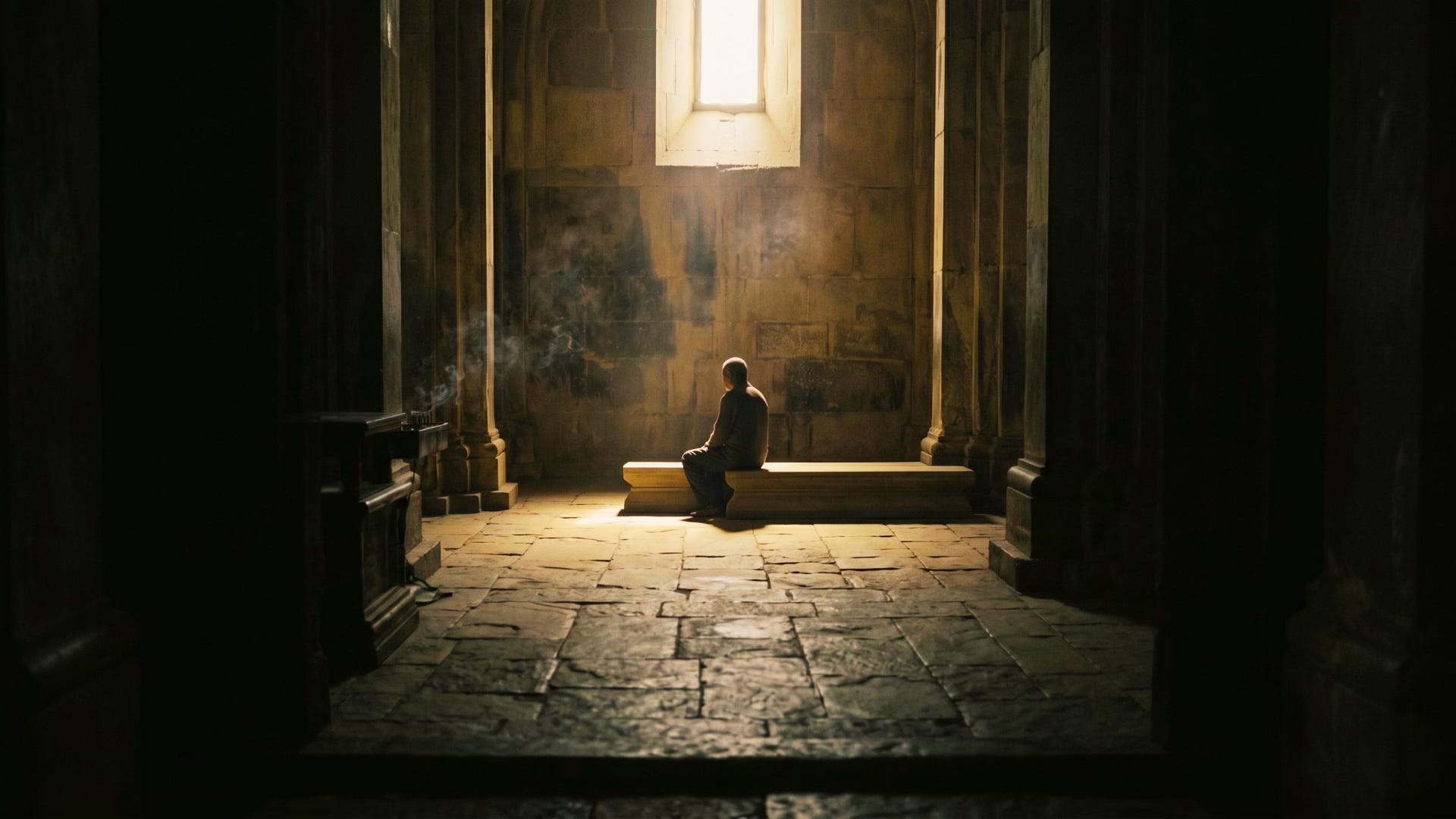
I knelt before a statue of Buddha in a temple in Vietnam, and something happened that I did not expect. I am not a Buddhist, though I have always found the tradition worth sitting with. I had come simply to sit, to be still, to see if something in that environment might quiet what daily life had not been quieting. What came over me was a stillness that had nothing to do with the ritual or the religion surrounding it. It was something my body recognized before my mind could name it. I remember thinking, quietly, that I could not remember the last time I had felt that. Not because the feeling was extraordinary, but because the ordinary texture of daily life had simply not included it for a very long time.
That gap is what I want to reflect on here.
We move through the world absorbing far more than we realize. The beliefs, fears, and assumptions of the people and systems around us settle into us quietly, the way weather settles into a room when a window has been left open. Most of the time we do not notice because we have been inside that room so long we have forgotten what a different temperature feels like. What I have found is that the ambient signal of daily life, for most of us, most of the time, runs on a frequency of contraction. Not crisis necessarily. Just a low, persistent narrowing. The news cycle. The urgency. The sense that something is always at stake and someone is always to blame. We swim in it so continuously that we stop noticing we are wet.
This is what I mean when I refer to worldly collective consciousness. Not a conspiracy. Not a shadowy manipulation, though I think there are forces that understand very well how fear keeps people manageable. I mean something simpler and more personal than that. A shared field of anxiety and division that we participate in, largely unconsciously, because it is simply what is in the air.
Here is something I keep returning to. Jesus spent time with the people his culture had decided were beyond the edges of the circle. Buddha sat under a tree for forty-nine days rather than joining any faction. Gandhi, in the middle of enormous political conflict, kept returning to a question of interior posture rather than exterior battle. I am not suggesting these figures are equivalent in their teachings. They are not. But what I find interesting is that each of them seemed to recognize something about the quality of attention they were bringing to the world, and that quality had consequences. They were not simply thinking different thoughts. They were moving through a different field entirely.
Joe Dispenza has spent years exploring how the mind interacts with what he describes as the quantum field, the energetic substrate that underlies observable reality. I find his work genuinely interesting, though I want to be careful not to carry his quantum framing further than the science can honestly support. What I keep arriving at, through my own reading and reflection, is something that extends beyond what Dispenza typically names. The field, in my experience and in my theological understanding, is not neutral energy. There is a divine consciousness within it. A presence that is not manufactured, not earned, and not reserved for people who have done sufficient interior work. It is available. It has always been available. The question is only whether we are tuned to it or tuned away from it.
That distinction, between the worldly consciousness we absorb by default and the divine consciousness we can consciously return to, is the one I find most worth sitting with. Because the movement between them is not an achievement. It does not require a temple in Vietnam or a forty-day retreat or a particular theological vocabulary. What it requires, as best I can see it, is a kind of noticing. A willingness to pause and ask what field you are actually moving through in a given moment, and whether that is the field you would choose if you were choosing consciously.
What I find interesting is that every serious contemplative tradition seems to arrive at some version of this question, through different language and different maps. The invitation is not to fight the worldly consciousness, which in my experience only feeds it. The invitation is to remember that another field exists, that you have access to it, and that returning to it is less like climbing and more like settling. Less like an accomplishment and more like coming home.
I invite you to reflect on what you have been absorbing without quite choosing to. Not with judgment, but with genuine curiosity. What would it feel like, even for a moment, to step out of the ambient noise and into something quieter and more true?