


There is something extraordinary about the human body that we seldom stop to consider. We cut a finger, and within moments, a complex process of repair begins. We don’t have to understand what is happening. We don’t have to instruct our cells to respond or remind our immune system that something needs attention. The body simply begins doing what it knows how to do.
A broken bone can mend. An infection can trigger an immune response. Damaged tissue can regenerate, sometimes with remarkable efficiency. Of course, the body doesn’t always heal as we would hope. Sometimes its efforts are incomplete, and sometimes medical intervention becomes essential. But even with those limitations, there is something rather wonderful about the healing processes already taking place within us.
And I’ve been wondering about something. How much of the body’s capacity for healing remains unexplored because we have yet to fully understand the relationship between consciousness and biology? It’s a question that has led me into some interesting territory.
The Mystery We Already Know Exists
Most of us have experienced how quickly our thoughts and emotions can influence our physical bodies. We receive unexpected news, and our hearts begin racing. We remember something embarrassing from years ago, and we feel a familiar discomfort. We anticipate a difficult conversation, and our stomach tightens before a single word has been spoken.
Nothing physically threatening may be happening in that moment. We may be sitting comfortably in our own home. Yet our body responds as though something significant is taking place. And in a sense, something is. An experience occurring within consciousness has produced a measurable physical response.
We know this happens. We understand some of the biological mechanisms involved. The nervous system, hormones, and brain are constantly communicating with the rest of the body. But I wonder whether we’ve given enough attention to what this relationship might mean for healing.
If fear and prolonged stress can influence our physiology, what happens when we experience greater peace? I keep coming back to that question. Emotional distress can affect immune function, and our expectations can influence our experience of pain. It seems likely that other biological processes respond to our internal experiences in ways we don’t yet fully understand, including what happens when someone begins to release emotional patterns they’ve carried for decades.
These aren’t entirely new questions. In fact, researchers in psychoneuroimmunology have spent decades examining the relationships among psychological experiences, the nervous system, and immune function. We already have evidence that these systems influence one another. What interests me is how much we may still have to discover.

The Different Ways We Explain Healing
Over the years, I’ve encountered people who approach healing from remarkably different perspectives. Some turn to conventional medicine, with its growing understanding of cellular processes, genetics, and disease. Others explore meditation, mindfulness, and the relationship between emotional well-being and physical health. Still others describe healing through spiritual energy, prayer, psychic abilities, or what they call the quantum field.
Joe Dispenza, for example, has become widely known for exploring the relationship between meditation, consciousness, and physical transformation. I spent a week at one of his retreats in Cartagena, and that week is what first drew me into meditation. At his events he shares accounts of people who report remarkable changes in their health, sometimes following intensive meditation experiences. Others, including practitioners of Reiki and various forms of energy healing, describe working with subtle energies that they believe influence physical and emotional well-being. And throughout human history, people from many spiritual traditions have reported experiences of healing that they understand as expressions of divine intervention, spiritual connection, or something beyond ordinary explanation.
I find all of this interesting, though I don’t believe every explanation must be correct, and I certainly don’t think we should abandon what medical science has taught us. What holds my attention is the possibility that people approaching healing from very different directions might sometimes be observing aspects of the same human experience.
They may be describing different phenomena. Some of these experiences likely have explanations we already understand, while others may involve processes we have not yet fully explored. And some of the explanations we currently accept will change as our understanding grows. Our explanations of the world have always changed as we learned more. That seems like a good reason to remain curious.
The Experience and the Explanation
There is a distinction I think is worth considering. When someone experiences a remarkable improvement in their health, there are really two things to explore: what happened, and why it happened. Those aren’t necessarily the same question.
Imagine someone who has experienced chronic pain for years. They begin practicing meditation, perhaps attending a retreat where they spend considerable time in reflection, emotional release, and focused awareness. Over time, their pain diminishes significantly.
For that individual, the experience may feel extraordinary. They may describe it as connecting with universal energy, entering the quantum field, or experiencing spiritual healing. Someone else might explain the same improvement through changes in the nervous system, reduced stress, altered pain processing, or the body’s response to expectation and emotional regulation.
Could both people be recognizing different aspects of the same experience? Possibly. But it’s also possible that one explanation is more accurate than another. The improvement itself deserves attention, regardless of the interpretation, and the explanation deserves to be explored rather than automatically accepted or rejected.
I think we sometimes become so attached to explaining an experience that we stop being curious about the experience itself. There is value in allowing the question to remain open long enough for us to learn something.
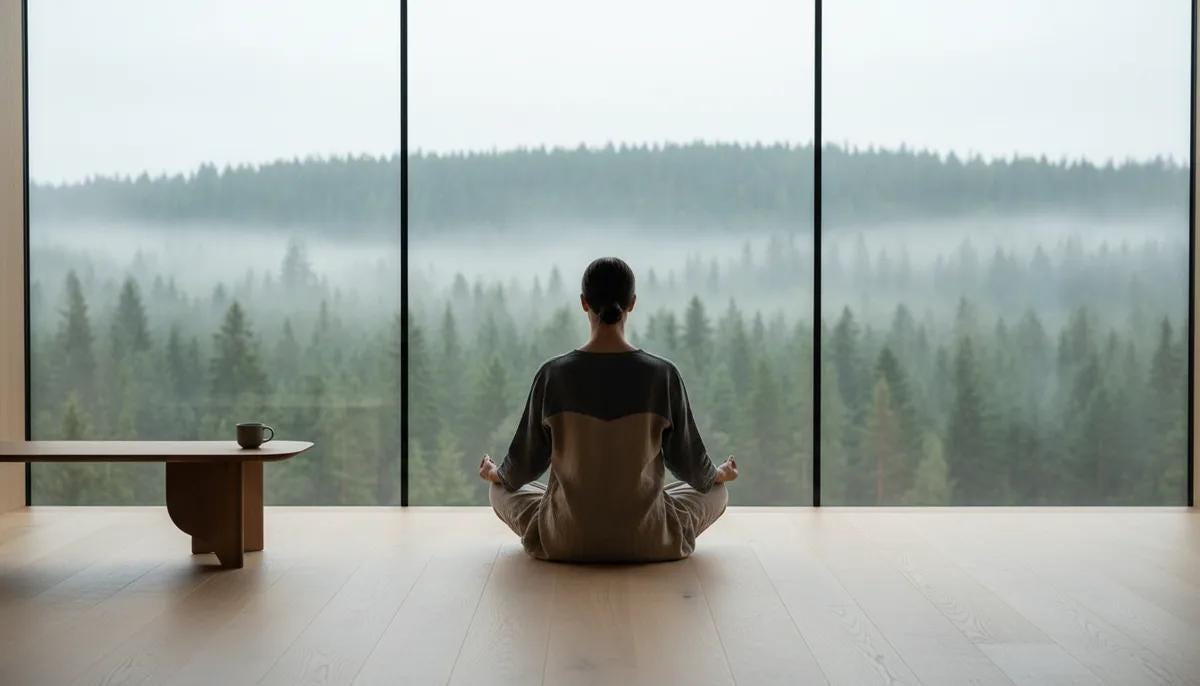
What the Body Already Knows
One of the more fascinating areas of research involves the relationship between prolonged stress and physical health. When we experience a threat, our bodies prepare us to respond. Our heart rate may increase. Stress hormones are released. Our attention becomes focused on whatever appears dangerous. This response serves an important purpose. If we genuinely need to protect ourselves, those changes can be enormously helpful.
But what happens when the threat is no longer outside us, when it exists primarily in memories, expectations, or emotional patterns developed many years ago?
Someone who has experienced repeated rejection may become unusually sensitive to signs of disapproval. Another person may have learned that disagreement is dangerous. Someone else may carry a deep expectation that something will eventually go wrong. These patterns can become so familiar that we hardly recognize them. They become part of the inner landscape through which we experience life.
And because our emotional experiences and physical responses are connected, the body may repeatedly respond to threats that are anticipated rather than immediately present. Over time, prolonged stress can influence sleep, inflammation, immune activity, and other aspects of physical health.
Now consider what might happen when someone begins recognizing those patterns. They might discover that a feeling of fear doesn’t always indicate danger. An emotional response that once seemed automatic starts to make sense. Over time they may find themselves becoming less defensive, less anxious, or more comfortable with uncertainty.
Their external circumstances may not have changed very much, but something within their experience has shifted, and that raises an interesting question. When our relationship with life changes, how much might our body’s response to life change as well?
We already know that emotional regulation can influence certain physiological processes, though the full extent of those relationships is still unknown. I suspect there is considerably more worth investigating.
What About the Quantum Field?
This is where the conversation becomes particularly intriguing. In physics, quantum fields are part of our scientific understanding of matter and energy. But when spiritual teachers speak about entering the quantum field, they are often describing something different. They may be referring to a state of consciousness in which ordinary perceptions of identity, time, and physical limitation seem to dissolve. Some describe profound feelings of connection, expanded awareness, or a sense that possibilities exist beyond what they previously believed.
I don’t think we have to dismiss those experiences simply because the language used to describe them differs from scientific terminology. People have reported unusual states of consciousness through meditation, prayer, and contemplation for thousands of years. Those experiences can be deeply meaningful.
At the same time, experiencing something we cannot easily explain doesn’t establish that we have accessed a quantum field capable of changing physical reality. That particular explanation remains scientifically unproven.
Still, I find myself wondering about the experience beneath the explanation. What actually happens within the brain and body during these profound meditative states? I would like to know how they influence the nervous system, why some people report significant emotional or physical changes afterward, and whether there are biological responses to deep meditation that we haven’t yet fully understood. And then there is the question I return to most often. Could some experiences currently attributed to mysterious external energies eventually be understood as expressions of capacities already present within us?
I don’t know. But I think those are questions worth asking.
Perhaps We Have Been Looking in Different Directions
There is something else that interests me. Many spiritual traditions encourage us to look beyond our ordinary sense of self. Some speak of surrendering to God, and others of awakening to a deeper awareness. Buddhist traditions invite us to examine the nature of the self and the attachments that contribute to suffering. Meditative practices often encourage us to become less identified with our thoughts and emotional reactions.
Although these traditions differ considerably in their beliefs and explanations, I notice something they sometimes share. They invite us to change our relationship with our experience. Rather than continually reacting to what happens, we begin observing. Rather than assuming every thought represents reality, we become curious. We begin to notice that emotions arise, change, and eventually pass, and they stop defining us.
This connects with something I’ve been exploring in recent reflections about our inner landscape. We may experience anxiety without becoming an anxious person. We may feel rejected without concluding that we are unworthy. Uncertainty can arrive without meaning that life has become unsafe. And as we become more aware of these distinctions, our experience of life can begin to change.
Could some of the benefits people attribute to spiritual healing emerge, at least in part, from this change in awareness? The experience of surrender, acceptance, or connection may allow certain biological processes to function differently. Some healing practices may also be effective in ways that differ from the explanations traditionally associated with them.
That possibility fascinates me. It leaves the spiritual dimension in place while inviting us to explore how deeply our spiritual, emotional, and physical experiences may be intertwined.
When Healing Doesn’t Happen
There is one important consideration I wouldn’t want to overlook. If we begin exploring the influence of consciousness on healing, we have to be careful about the conclusions we draw. It would be easy to suggest that people remain ill because they haven’t developed sufficient awareness, released the right emotions, or connected with the appropriate energy. That conclusion is neither fair nor compassionate, and it isn’t supported by what we currently know.
Illness is complicated. Genetics, infections, environmental exposures, aging, physical injuries, and countless other factors influence our health. Some conditions respond well to treatment, while others remain difficult despite extraordinary medical care and personal effort.
A person can live with great peace and still become seriously ill. Someone can practice meditation for decades and still develop cancer. And a person who experiences remarkable healing doesn’t necessarily possess greater spiritual understanding than someone whose illness continues.
Whatever role consciousness may play in healing, it doesn’t follow that we have unlimited control over our biological circumstances. That is another reason to approach this subject with curiosity rather than certainty. We can explore the possibilities without turning healing into another measure of personal success or spiritual worth.
A Different Way to Ask the Question
I’ve come to think we’ve been asking the question in a way that limits our understanding. We often ask whether the mind can heal the body. But that question assumes that the mind and body are entirely separate things.
What if we began somewhere else, and asked how our conscious experiences participate in the biological processes already taking place within us? That question opens onto more specific ones: how our expectations influence pain, how our emotional history affects the nervous system, what happens to immune function during prolonged distress, and what changes when a person begins experiencing greater safety, connection, acceptance, and peace.
Some of these already have partial answers, and others remain open. Exploring them may eventually help us better understand experiences that people have described through the language of energy, spirituality, and quantum healing.
It may turn out that some of those explanations are mistaken. Others may remain matters of personal belief. And some might inspire discoveries that deepen our understanding of consciousness and biology in ways we haven’t yet imagined. I don’t see any reason we need to decide everything in advance. Sometimes the most useful thing we can do is remain willing to learn.

The Wonder of What We Don’t Yet Know
The more I consider this subject, the less interested I become in defending any particular explanation. I’m more interested in the mystery itself.
We inhabit bodies capable of responding to experiences that exist entirely within our awareness. A memory can bring tears. An expectation can create fear. A moment of kindness can soften something within us that has remained guarded for years. And profound experiences of meditation, prayer, or emotional connection can sometimes leave us feeling physically different. These relationships are real, even when our understanding of their mechanisms remains incomplete.
Future discoveries may explain some of the experiences currently attributed to spiritual energies or quantum fields, or they may show that some of our most cherished explanations need reconsidering. I would welcome either outcome if it brought us closer to understanding.
I don’t know how far the relationship between consciousness and the body extends. But I find the question itself deeply interesting.
What if some of what we have been searching for beyond ourselves is connected to capacities that have been within us all along?
Not limitless capacities. Not guarantees of healing. But possibilities we have only begun to understand.
The next time your body responds to something that exists only in your awareness, a memory or a worry or a moment of kindness, I invite you to notice it, and to ponder what else that same connection might be capable of.
A Question for My Next Reflection
As I’ve considered the remarkable relationship between consciousness and our body’s natural capacity for healing, another question has begun to emerge.
We’ve explored how our own thoughts, emotions, and awareness might influence what happens within us. But what about the influence of others? Could someone’s prayers, compassion, or focused intentions somehow contribute to another person’s healing, even across great distances?
It’s an intriguing possibility, one that invites us to look beyond ourselves and consider how deeply we may be connected to one another.
I’ll explore that question in my next reflection, Can Healing Reach Beyond Ourselves?
© Dr. Doug Gulbrandsen