

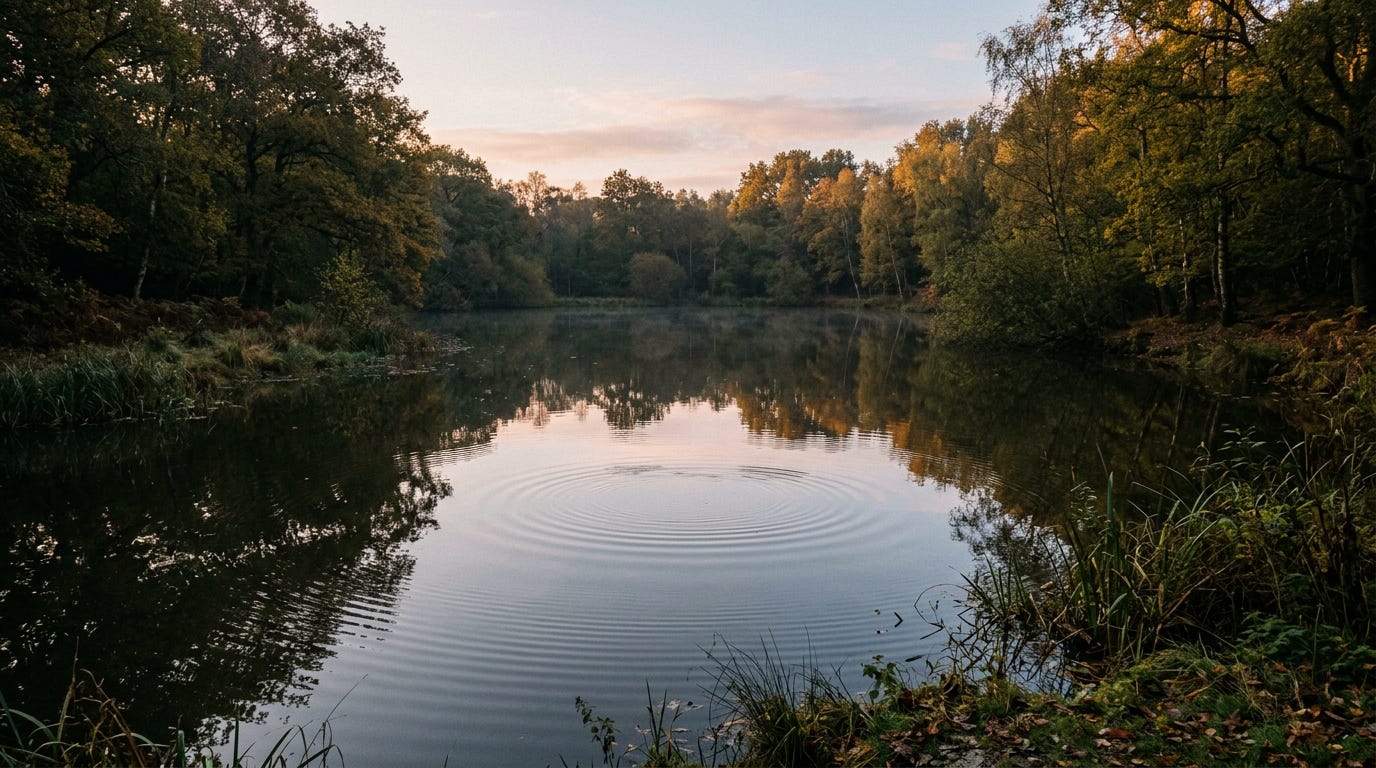
Why trauma stored in the body keeps repeating, in relationships and elsewhere, and the slow work of recognizing it, walking with it, and finally letting it go.
Ben Oofana has spent most of his life studying how people heal from what nearly breaks them. He trained under a Kiowa medicine man in the mountains of Oklahoma, apprenticed for seventeen years under a master of Xing Yi, Bagua, and Qigong in the Taoist tradition, and has lived for long stretches inside Sri Lanka’s former war zone, among people who used to carry rifles for a living. His core idea is not complicated, though living it is: the pain a person goes through has to be digested, the way food is digested, or it stays lodged in the body and quietly runs the rest of that person’s life from there.
Most of us know someone, maybe ourselves, who keeps landing in the same relationship wearing a different name. It looks like bad luck from a distance, but underneath it usually behaves like unfinished business, something that was never fully felt the first time around and keeps getting handed back until it finally is.
There is a particular problem with doing that work now, inside a culture trained to skim rather than settle. Hours spent scrolling shape how the brain holds attention, and a nervous system built for skimming has a hard time sitting still long enough to feel something all the way through. Grief, anger, old fear. None of it moves quickly. It asks for the kind of sustained attention a feed is specifically designed to interrupt.
Underneath most contemplative traditions sits a practice that works differently. It runs roughly like this: notice what is actually happening, notice what it stirs in the body, whether that is the throat, the chest, or somewhere lower down, then breathe into it slowly, all the way to the bottom of the exhale, without trying to talk it into leaving. The feeling gets to be what it is. That is nearly the whole instruction. It sounds almost too simple to work, and it is exactly the simplicity most people skip past on their way to something more complicated.
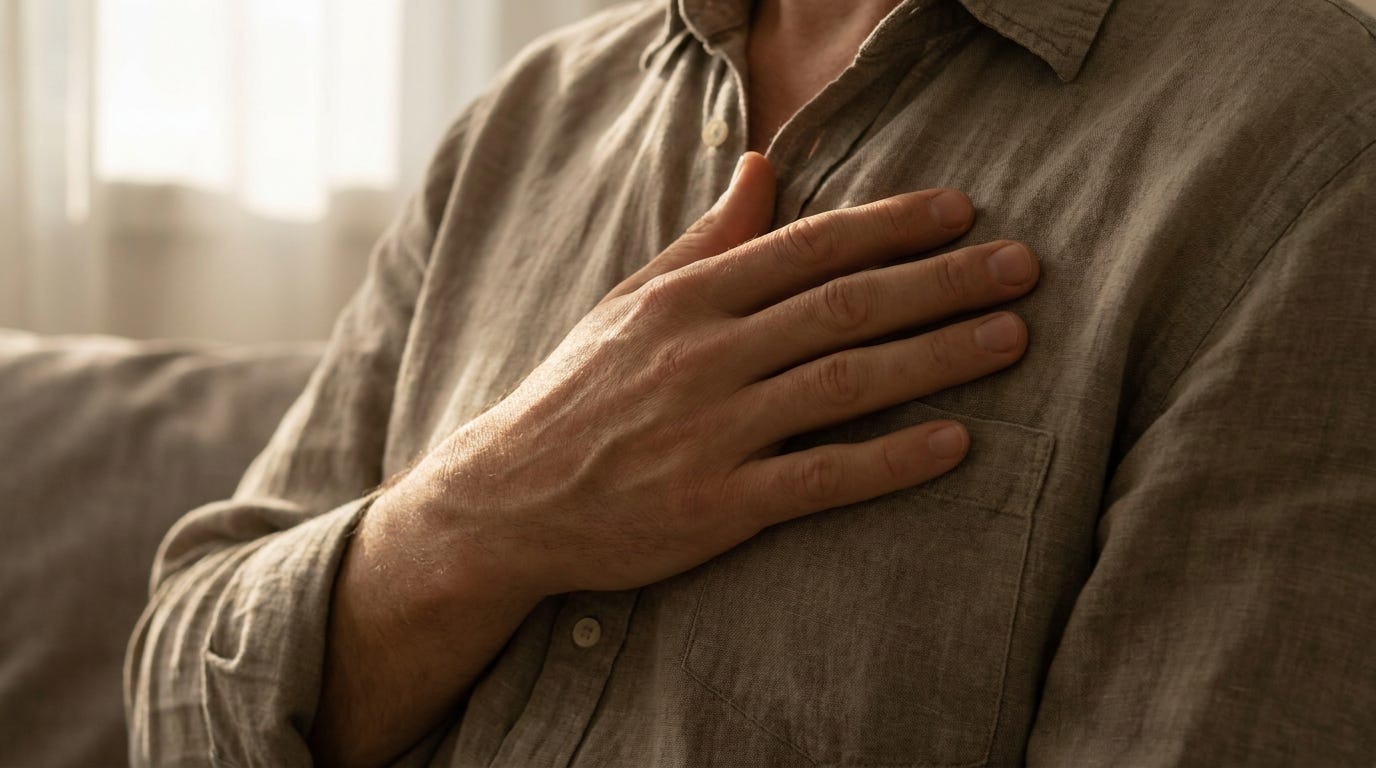
This is where it gets interesting. If it really is this simple, why does almost no one do it? Partly because sitting inside grief or fear without immediately trying to fix or escape it is genuinely uncomfortable. Partly because nobody taught anyone how. Most people were taught the opposite: bury it, distract from it, medicate it, move on. Feeling a feeling all the way through turns out to be a skill like any other, and like any skill, it gets easier with repeated, unglamorous practice.
Movement changes the equation. Walking in particular seems to loosen what stillness alone cannot reach. Contemplative traditions around the world tend to pair breath with motion rather than asking people to sit rigid, and there is a reason for that: the body metabolizes what the mind alone gets stuck circling. In the Taoist tradition, the yin-yang symbol is sometimes read as body and spirit, each one feeding the other rather than one ruling over the other. Healing old pain is not a purely mental exercise. It is something the whole body has to do.
There is an old idea from the Hindu-Vedic tradition that treats karma as an assignment still being handed out, a specific lesson attached to whatever currently feels unbearable. A wound with a lesson folded inside it.
What would change if the hardest thing happening right now were approached as something to learn rather than something to merely survive?
Most people never ask that question, because the difficulty showed up uninvited, and asking anything of it can feel like letting it win. But carrying it undigested for another decade tends to cost more than the asking does.
None of this happens overnight, and no single walk or breath resolves what took years to bury. But something does shift, slowly, in anyone willing to stop managing a feeling and start actually feeling it.
What is still being carried, unfinished, somewhere in the body right now? That is worth sitting with quietly, without needing to solve it today. One slow breath, all the way down and all the way back out, is usually enough to find out where it lives.
To go to the entire podcast, click here.
© Dr. Doug Gulbrandsen