

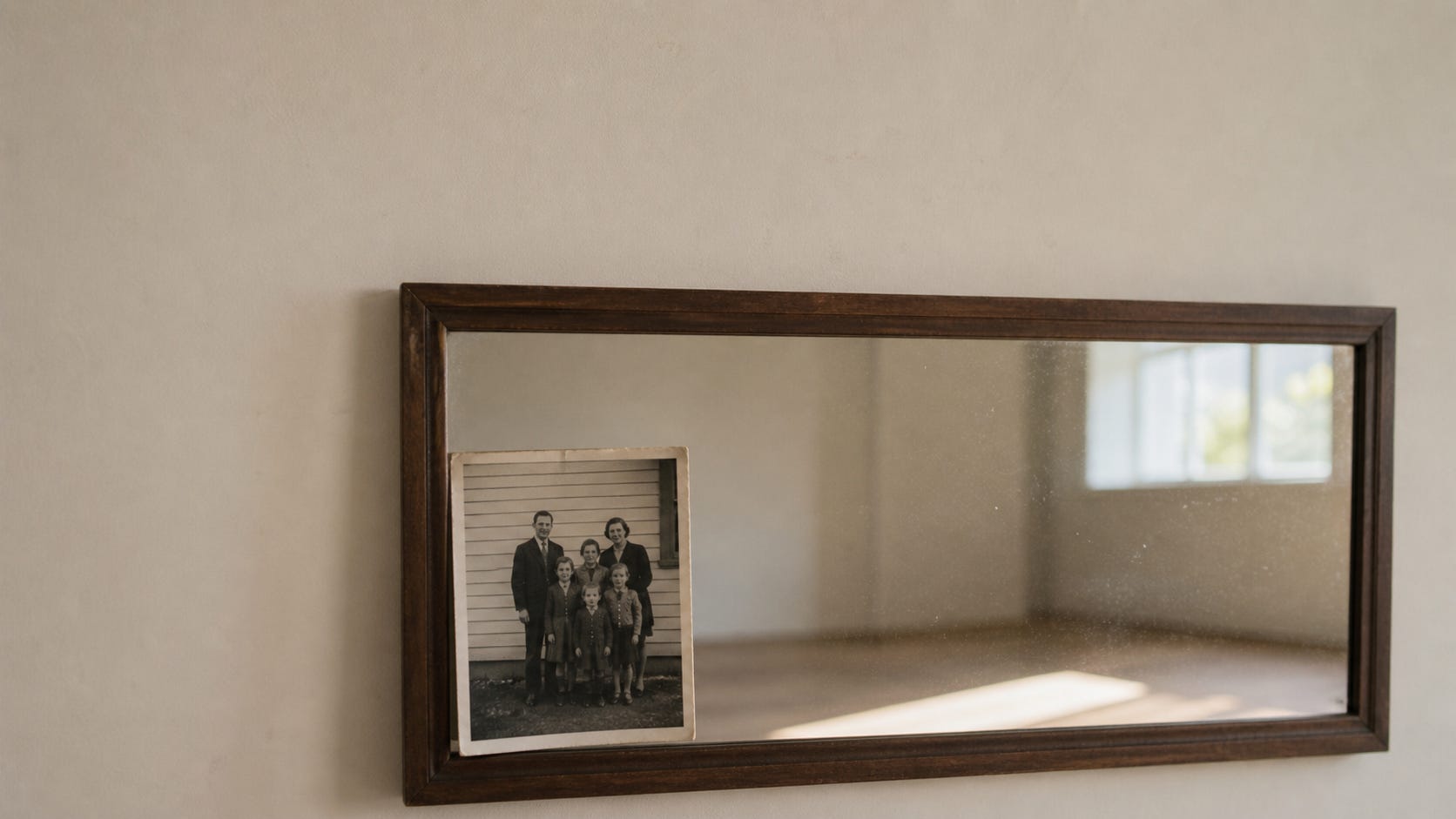
A friend and I were talking recently about something she had noticed in her 4D Personal Portrait. She cares about details. She wants things done well, and doing them well matters to her in a way she has never really questioned.
As we talked, she remembered her mother. There was no complaint in it. She said it the way you state a fact you have known about yourself for years without ever turning it over. Growing up, there had been no shortage of messages about what she needed to do, how she needed to do it, and what was expected of her. So she asked the obvious question. Was the care she takes actually hers, or was it something her mother left behind?
Those sound like two different answers. I don’t think they are. In my experience both are usually true at the same time, and that is exactly what makes this so hard to see clearly in ourselves.
When the same behavior has different roots
Two people can do the identical thing for reasons that have almost nothing in common.
One woman is careful with her work because excellence satisfies something in her. Nobody has to see it. Nobody has to compliment it. She finishes something well and feels the quiet click of it being right, and that is enough.
The second woman is just as careful. Underneath her attention to detail, though, there is a running commentary. Don’t make a mistake. Make sure you get this right. What will they think. You should have done better. Nobody is saying those words to her anymore. They don’t have to. She has taken over the job herself, and she is more thorough about it than her mother ever was.
From the outside you could not tell these two apart. The work looks the same. The standards look the same. Inside, one of them is expressing something and the other is defending against something, and across a lifetime that difference costs one of them a great deal.

Acting, or being acted upon
Here is the distinction I keep coming back to. Am I acting, or am I being acted upon? Am I at cause, or at effect?
Being at cause does not mean my past has released its grip. Everyone who raised me, taught me, hurt me, or loved me is still in there somewhere, and pretending otherwise has never worked for anyone I know. It means I am aware enough to choose anyway. I can look at something and say, this matters to me, this is how I want to live, and mean it as my own sentence rather than someone else’s.
At effect, something older is doing most of the deciding. An expectation. A fear of disappointing someone. A need for approval. A childhood rule that arrived before I had the equipment to examine it. A voice I heard so many times that I eventually stopped hearing it as a voice at all. I just called it me.
The language gives it away
One place the difference shows up is in the words we use with ourselves. A value tends to say I want to do this well. An imprint says I have to. A few letters separate those sentences and they produce very different lives, because only one of them still has a door in it.
That does not mean every obligation is an imprint. Plenty of things I do out of duty are things I chose deliberately, and I would choose them again tomorrow. The real test is not how a commitment feels while I am keeping it. It is what happens inside me when I imagine not keeping it.
Can I let this one be good enough?
Can I disappoint someone and still recognize myself in the morning?
An authentic value tends to leave room for the answer. An imprint has usually decided in advance, and it will punish the question itself before you get anywhere near an answer.
What if both are true?
This is where I think we make self-awareness simpler than it actually is. We want a clean line. Either this is who I really am, or this was installed in me by someone else. People do not come apart that neatly.
I know my friend values doing things well. She may have valued it before her mother ever said a word on the subject. And her mother’s expectations landed directly on top of that, the way weather lands on ground that was already there. The message did not create the value. It pressed down on it, and something else attached itself along the way. Fear. Perfectionism. The sense that getting a thing wrong said something about her as a person.
Now the value and the fear are braided together, and that changes what the work actually is. She does not have to stop caring about excellence. She has to find out whether she can care about it without being afraid of imperfection. Those are two different problems, and confusing them has led a lot of good people to throw out something true in an effort to get rid of something painful.
The question beneath the question
Instead of asking only where a behavior came from, we can ask what is moving me right now.
There is one question I keep returning to. If I could remove the fear, the guilt, the need for approval, and the imagined consequences from this choice, would I still choose it?
Sometimes the answer is yes. I still want to be kind when nobody is watching me be kind. I still want to make something when nobody notices it was made. I still want to keep my word when there is no penalty for breaking it. Something underneath says this matters, and it does not need an audience in order to keep saying it.
Sometimes the answer is no, and I discover I do not actually want the thing I have organized years of my life around wanting. That one is unsettling. It is also the beginning of getting some of those years back.
Returning to authorship
Nobody gets through a life without imprints. Parents leave them. So do teachers, churches, cultures, the people who loved us and the people who left. Success leaves them as reliably as failure does. A win that gets noticed teaches us what to keep doing in order to be noticed again, and we can spend a long time obeying that lesson without ever once deciding to.
The goal cannot be to become whoever we would have been if none of it had ever happened. That person does not exist and never did.
Freedom looks quieter than that. I can hear my mother’s voice and decide whether I agree with her. I can notice an old expectation and decide whether it still has a place in my life. I can find that something I was taught is also something I genuinely believe, keep it, and let go of the fear that came stapled to it.
That is not rejecting where we came from. It is taking authorship of where we are.
Maybe this is part of what a quiet return really means. Not going back to some untouched version of ourselves that never got marked by anything. Returning instead to the place where choosing becomes possible again, where I should can become I choose, where the older voices get quiet enough that we can finally hear our own underneath them.
The next time you catch yourself doing something you have always done, consider sitting with it for a moment before you explain it. Ask who is doing the choosing.
© Dr. Doug Gulbrandsen