


I spent a long time trying to be flawless. I think most people who were raised in a religious household did, whether they would name it that way or not. There was a standard hovering somewhere above us, and the question was always whether we were measuring up. I did not think of it as perfectionism at the time. I thought of it as faithfulness.
It took me longer than I would like to admit to notice that the standard I was chasing may have been built on a mistranslation.
In the New Testament, the Greek word most often rendered as “perfect” is teleios. It comes from telos, meaning end, purpose, or completion. When Jesus says in the Sermon on the Mount, “Be ye therefore perfect, even as your Father which is in heaven is perfect,” the word underneath that sentence is not about flawlessness. It is about wholeness. Maturity. Arriving at the fullness of what you were always meant to be. The translation that shaped most of us, somewhere in the back of the mind, was “be without defect.” The word in the text means something closer to “be complete.”
That distinction is not subtle. It changes the entire orientation of the spiritual life.
The Hebrew concept runs even deeper. The word shalem, from the same root as shalom, carries this same quality: whole, unbroken, at peace, nothing missing and nothing in excess. When the Hebrew scriptures describe someone as walking with integrity, the word underneath is often tam or tamim, used of Job, of Noah, of Abraham. These words do not describe moral perfection in the way we use the phrase. They describe a kind of inner coherence. A person who is not divided against themselves.
Here is something I keep contemplating: the model we were handed was not, at its root, a standard to achieve. It was a direction to grow into.
In Thai, a language I have lived with for some time now, the word สมบูรณ์ (somboon) means complete, whole. It shares something with both teleios and shalem. What it does not carry is the sense of being without flaw. A ripe mango is somboon. A meal that has everything it needs is somboon. The word belongs to the world of abundance, not absence of defect. I find that worth considering. Two traditions, across thousands of miles and thousands of years, seem to agree that the thing we are pointing at when we reach for the word “perfect” is not a kind of emptiness, not a self scrubbed clean of everything impure, but a kind of fullness that does not leave anything out.
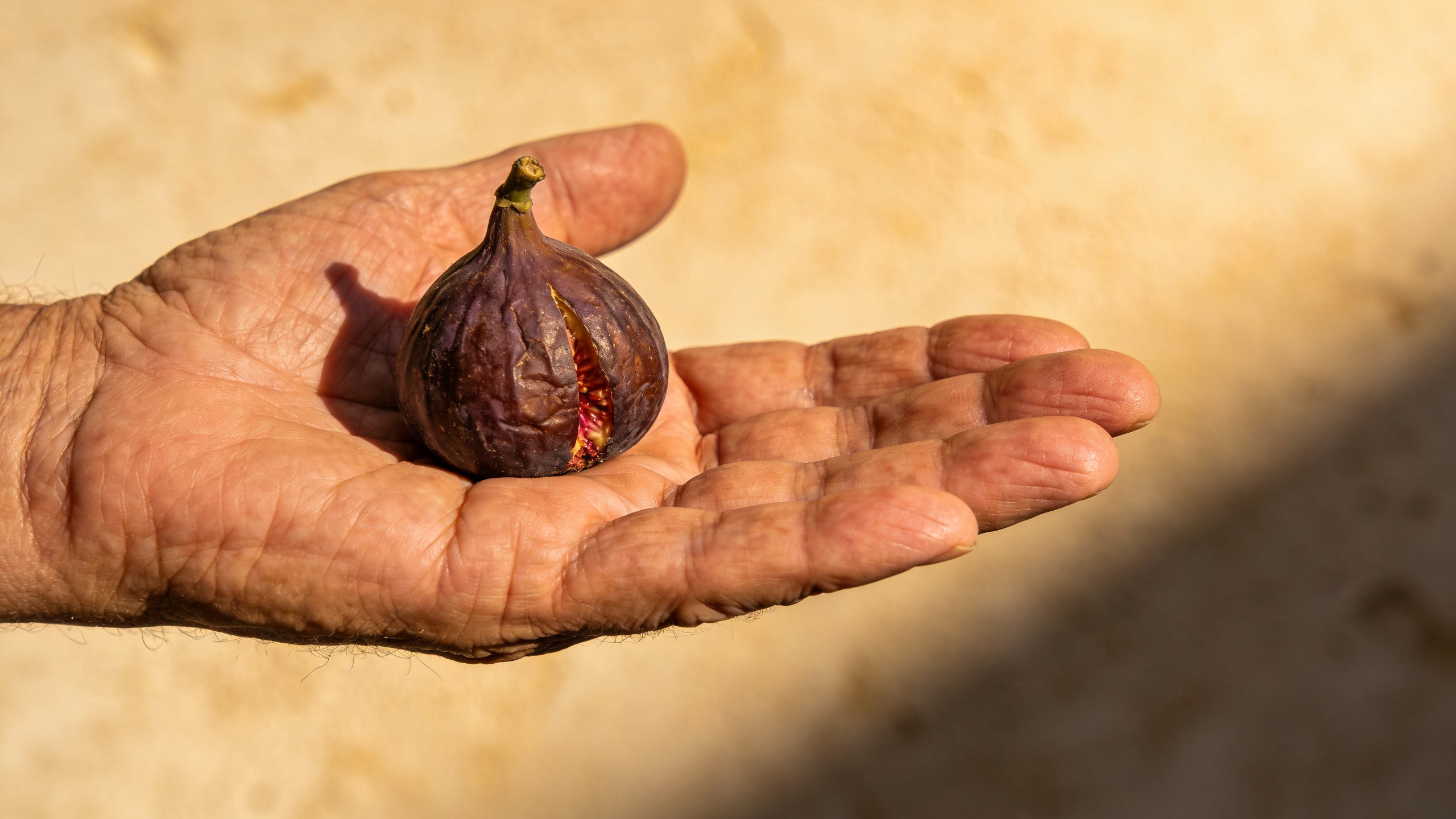
What we built in its place, at least in the Western religious imagination, is something quite different. The mask of perfection is not the same thing as wholeness. The mask performs. It manages. It controls what is seen and what is not. The mask is, in its own way, a division, the person I present against the person I actually am. And that division is exactly what shalem is not. That gap is exactly what teleios is meant to close.
I am not suggesting the ancient texts are without difficulty, or that the traditions that emerged from them are easily mapped onto modern experience. I want to be careful here. The scholarship on these words is deep and the interpretive questions are real. But the basic linguistic point appears to be solid: the word most of us heard as a demand for flawlessness meant, in its original context, something like “be whole or complete.”
What might it have felt like to receive that invitation instead of the other one?
I think of the people who have spent decades trying to earn their way to flawlessness. The path was never about earning. It was about becoming, gradually, more fully themselves.
Perfectionism is not vanity in most of those cases. It is fear. Fear that without the performance, there is nothing underneath worth keeping. The mask becomes the identity because the actual person has been in hiding for so long that the return feels impossible. Or worse, feels like there is nowhere to go.
Wholeness is not a destination you arrive at. It is a direction you keep moving in, gradually, over the course of a life.
The question is not whether you can build yourself into something acceptable. The question is whether you are willing to stop performing long enough to let the becoming happen from a truer center.
That is a harder invitation in some ways. The performance at least gives you something to do. The becoming asks you to move from the inside out, slowly, honestly, without a finish line that declares you complete.
I do not think good enough is the right phrase for this, and I have never liked it. It sounds like a lowered standard, a settling. What I am pointing at is not that. The wholeness described in teleios, in shalem, in somboon is not mediocrity with better self-esteem. It is a recognition that the human being standing in front of you, incomplete in some ways, scarred in others, still working things out, is not a failed version of something it should have been. It is an actual person on an actual path. And that is not a consolation prize.
What I have found is that the moment people begin to suspect that wholeness or completeness, not flawlessness, was always the direction, something in them softens. The effort does not disappear. The growth does not stop. But the quality of it changes. It begins to feel less like striving against yourself and more like growing from within. Gradually. Over the course of a life.
Take a moment to sit with the question of what you have been chasing, and whether the standard you have been measuring yourself against was ever actually the point. Not to let yourself off the hook for anything real. But to ask whether the path you are on might be leading somewhere truer than the mask ever could.
© Dr. Doug Gulbrandsen